how to reduce customer acquisition cost in d2c brands

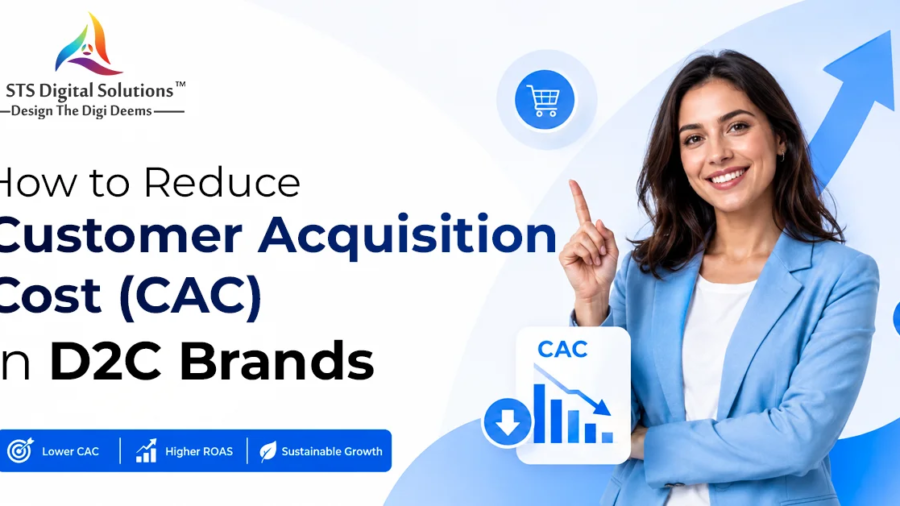
How to Lower Customer Acquisition Cost for D2C Brands in 2026

D2C brands can lower Customer Acquisition Cost (CAC) by combining SEO, content marketing, conversion rate optimization (CRO), email marketing, customer retention, and AI-driven insights. Instead of relying only on paid advertising, successful brands build multiple acquisition channels that generate sustainable, cost-effective growth.

Introduction

Customer Acquisition Cost (CAC) has become one of the most important metrics for every D2C business.

As advertising costs continue to rise across Meta AdsGoogle Ads, and other platforms, many brands find themselves spending more to acquire each new customer while maintaining the same revenue.

This creates a major challenge.

How can you grow profitably without continuously increasing your marketing budget?

The answer isn’t to stop advertising—it’s to build a balanced marketing strategy where organic traffic, customer retention, and conversion optimization work alongside paid campaigns.

At My Adwise, we’ve observed that brands with the healthiest long-term growth rarely depend on a single traffic source. Instead, they invest in systems that reduce acquisition costs while improving customer lifetime value.

What Is Customer Acquisition Cost (CAC)?

Customer Acquisition Cost represents the average amount a business spends to acquire one new customer.

A simple formula is:

CAC = Total Marketing & Sales Cost ÷ Number of New Customers Acquired

For example:

  • Marketing Spend: ₹2,00,000
  • New Customers: 400

CAC = ₹500 per customer

Reducing this number while maintaining quality customers improves overall profitability.

Why CAC Is Increasing in 2026

Several factors contribute to rising acquisition costs:

  • Increased competition in ecommerce.
  • Higher advertising costs.
  • Audience fatigue from repetitive ads.
  • Privacy changes affecting ad targeting.
  • Greater customer expectations.

Because of these changes, businesses need smarter acquisition strategies instead of simply increasing ad budgets.

1. Invest in SEO for Sustainable Traffic

Paid ads stop generating traffic when the budget ends.

SEO continues attracting visitors long after content is published.

Focus on:

  • Product page optimization
  • Collection page SEO
  • Buying guides
  • Educational blog content
  • Technical SEO
  • Internal linking

Organic traffic often delivers lower acquisition costs over time because you aren’t paying for every click.

2. Improve Conversion Rate Optimization (CRO)

Reducing CAC isn’t only about attracting more visitors.

It’s also about converting more of your existing traffic.

Small improvements can make a significant difference:

  • Faster website speed
  • Clear product benefits
  • Better call-to-action buttons
  • Trust badges
  • Customer reviews
  • Simple checkout process

When your conversion rate improves, your effective acquisition cost decreases.

3. Build an Email Marketing System

Many brands focus entirely on acquiring new customers while ignoring existing ones.

Email marketing helps:

  • Recover abandoned carts.
  • Promote new products.
  • Encourage repeat purchases.
  • Build long-term customer relationships.

Retaining customers is usually more cost-effective than constantly acquiring new ones.

4. Create Helpful Content That Builds Trust

Customers rarely purchase immediately.

Before buying, they often research products, compare options, and read reviews.

Publishing content such as:

  • Buying guides
  • Product comparisons
  • Frequently asked questions
  • Industry insights

helps your brand become a trusted source throughout the buying journey.

This supports both SEO and AI-powered search visibility.

5. Use AI to Make Better Marketing Decisions

Artificial intelligence can help businesses identify patterns that improve marketing efficiency.

AI-powered tools can assist with:

  • Keyword research
  • Content planning
  • Customer segmentation
  • Performance analysis
  • Product recommendations

The goal isn’t to replace human decision-making but to make it more informed.

6. Increase Customer Lifetime Value (LTV)

Lower CAC becomes even more valuable when customers continue purchasing.

Strategies to improve Lifetime Value include:

  • Loyalty programs
  • Subscription models
  • Upselling relevant products
  • Cross-selling complementary items
  • Exceptional customer support

Growing LTV allows businesses to spend more confidently on acquisition while remaining profitable.

SEO vs Paid Ads: Which Is Better for CAC?

The most successful D2C brands don’t choose one over the other—they combine both.

Paid Ads provide immediate traffic and quick testing opportunities.

SEO builds long-term visibility and reduces dependence on advertising costs.

Using both channels together creates a more resilient growth strategy.

Common Mistakes That Increase CAC

Many businesses unknowingly increase acquisition costs by:

  • Depending entirely on paid ads.
  • Ignoring organic search.
  • Sending traffic to poorly optimized landing pages.
  • Tracking vanity metrics instead of conversions.
  • Failing to retain existing customers.
  • Neglecting website performance.

Avoiding these mistakes often produces better results than simply increasing ad spend.

My Adwise Growth Framework™

At My Adwise, we recommend a balanced acquisition strategy built around five pillars:

  1. SEO – Generate consistent organic traffic.
  2. Paid Advertising – Capture immediate demand.
  3. Content Marketing – Build trust and authority.
  4. Conversion Optimization – Turn visitors into customers.
  5. Retention Marketing – Increase repeat purchases and customer lifetime value.

Together, these pillars create a sustainable growth engine instead of relying on a single marketing channel.

Frequently Asked Questions

What is a good CAC for a D2C brand?

There is no universal benchmark. A healthy CAC depends on your average order value, profit margins, and customer lifetime value.

Can SEO reduce Customer Acquisition Cost?

Yes. While SEO requires time and consistent effort, it can generate ongoing organic traffic that reduces reliance on paid advertising.

Why is customer retention important?

Retaining existing customers generally costs less than acquiring new ones and often leads to higher long-term profitability.

Conclusion

Lowering Customer Acquisition Cost isn’t about finding one marketing trick.

It’s about building a system where SEO, paid advertising, conversion optimization, retention marketing, and AI-powered insights work together.

Brands that diversify their acquisition channels, improve website performance, and focus on long-term customer relationships are better positioned to grow profitably in an increasingly competitive ecommerce market.

Rather than chasing cheaper clicks, build a strategy that consistently attracts, converts, and retains the right customers.

Why Choose My Adwise?

At My Adwise, we help D2C and Shopify brands reduce acquisition costs through SEO, AI Overview optimization, technical SEO, content strategy, conversion optimization, and performance marketing.

Our goal is simple: help businesses generate qualified traffic, improve conversions, and achieve sustainable long-term growth instead of depending solely on rising advertising budgets.
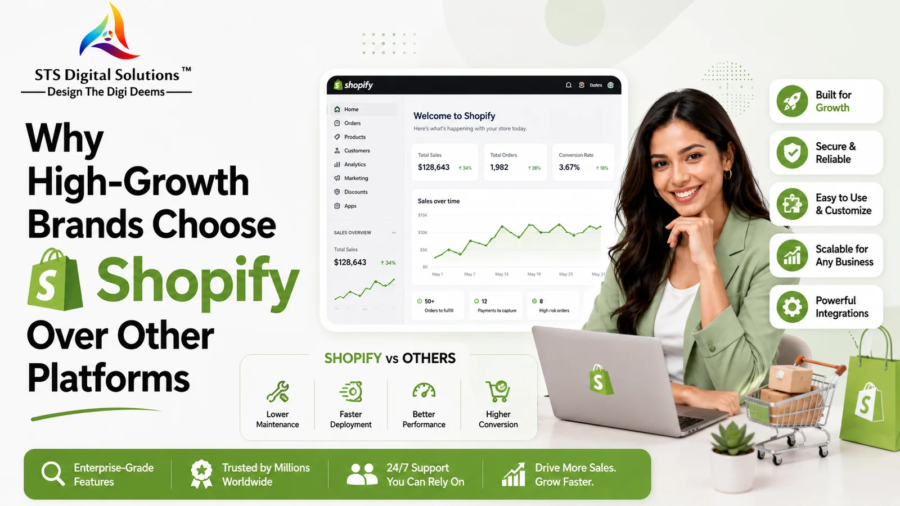
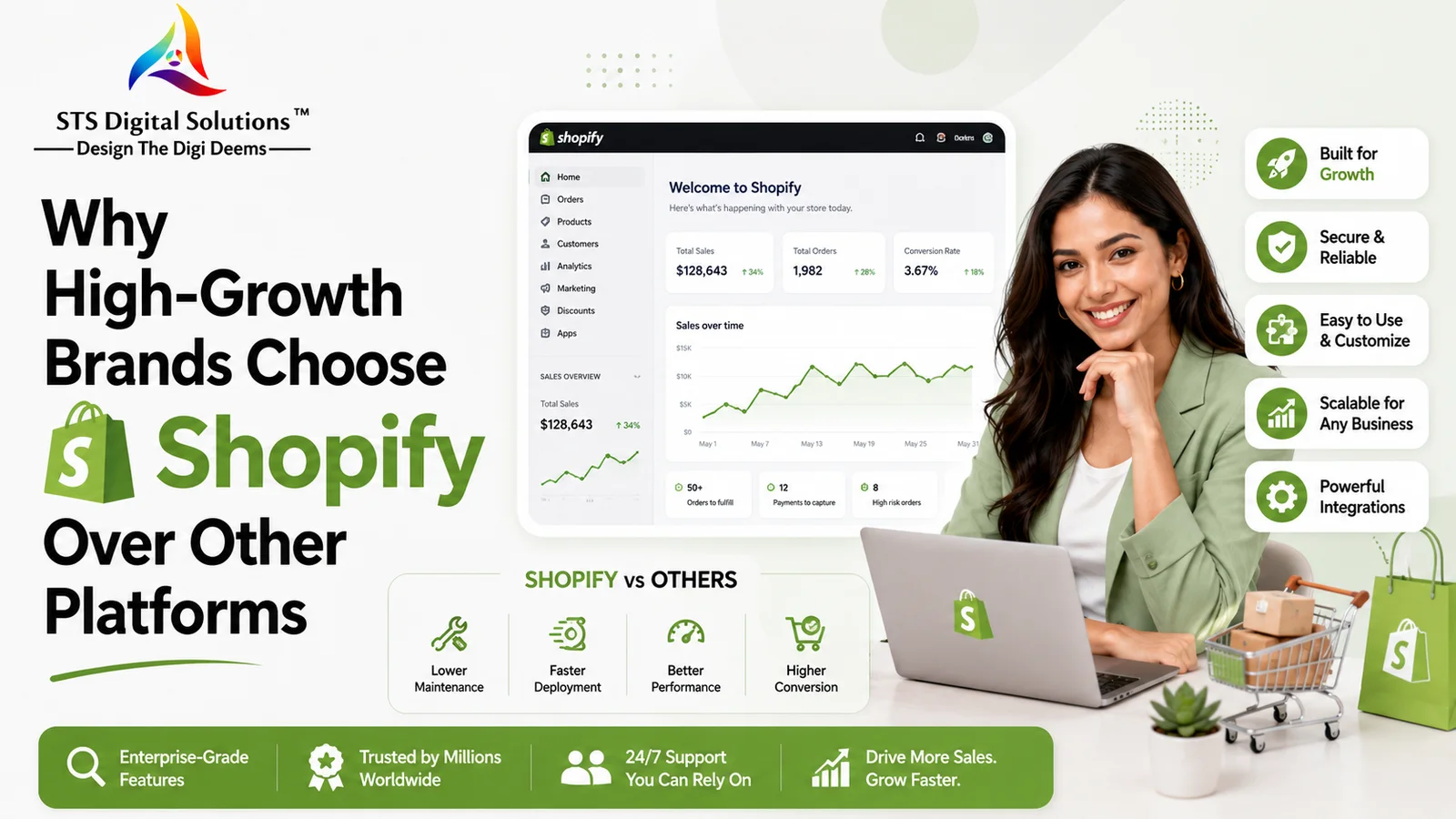
why high growth brands choose shopify over other platforms

Why Growing Brands Choose Shopify Over Other Ecommerce Platforms (2026 Guide)

Growing ecommerce brands choose Shopify because it offers a reliable, secure, and scalable platform that simplifies store management while supporting SEO, AI-powered search visibility, fast performance, and business growth. Its extensive app ecosystem and ease of use make it a strong choice for brands planning long-term expansion.

Introduction

Choosing the right ecommerce platform is one of the most important decisions for any online business.

A platform isn’t just where your products are displayed—it influences your website’s speed, customer experience, search visibility, security, and future scalability.

Many businesses begin with one platform only to migrate later because it no longer supports their growth.

Over the past few years, Shopify has become one of the most widely adopted ecommerce platforms for startups, D2C brands, and enterprise businesses alike.

But why are so many growing brands choosing Shopify over alternatives?

Let’s explore the key reasons.

1. Shopify Is Built to Scale

One of Shopify’s biggest advantages is scalability.

Whether you’re selling ten products or ten thousand, Shopify is designed to handle increasing traffic and orders without requiring major infrastructure changes.

As your business grows, your platform should support that growth instead of becoming a technical challenge.

2. Faster Website Performance

Website speed directly affects:

Shopify provides optimized hosting and a global content delivery network (CDN), helping stores deliver pages quickly across different locations.

While merchants still need to optimize images and apps, Shopify offers a strong technical foundation for performance.

3. Strong SEO Capabilities

Contrary to a common misconception, Shopify can perform very well in search results when implemented correctly.

It supports:

  • Custom title tags
  • Meta descriptions
  • Clean URLs (within platform structure)
  • XML sitemaps
  • Mobile-friendly themes
  • HTTPS security
  • Structured data through themes or apps

Combined with high-quality content and technical optimization, these features help brands compete for valuable organic traffic.

4. Security Without Complexity

Security is essential for every ecommerce business.

Shopify manages many technical responsibilities, including:

  • SSL certificates
  • Platform updates
  • Hosting infrastructure
  • PCI compliance for payments

This allows businesses to spend more time improving marketing and customer experience instead of maintaining servers.

5. Built for AI-Driven Search

Search is evolving rapidly.

As AI-powered search experiences become more common, ecommerce websites need:

  • Fast loading pages
  • Structured content
  • Clear product information
  • Helpful buying guides
  • Strong internal linking

Shopify supports these strategies when paired with effective SEO and content marketing.

The platform itself isn’t a ranking factor, but it provides a solid environment for implementing AI-friendly SEO practices.

6. An Extensive App Ecosystem

Every business has unique requirements.

Shopify’s app marketplace allows merchants to extend functionality for areas such as:

  • Email marketing
  • Loyalty programs
  • Reviews
  • Inventory management
  • Analytics
  • SEO
  • Shipping
  • Upselling

Choosing apps carefully is important, as installing too many can affect performance.

7. Excellent User Experience

One reason founders appreciate Shopify is its ease of use.

Business owners can manage:

  1. Products
  2. Orders
  3. Customers
  4. Discounts
  5. Inventory
  6. Marketing campaigns

without requiring advanced technical knowledge.

This simplicity allows teams to focus on business growth rather than platform management.

Shopify vs Other Ecommerce Platforms

Different platforms suit different business needs.

For example:

  • WooCommerce offers greater flexibility but often requires more technical maintenance.
  • Magento (Adobe Commerce) is powerful for large enterprises but typically demands higher development resources.
  • Shopify balances usability, scalability, and reliability, making it a popular choice for many growing D2C brands.

The best platform depends on your budget, technical expertise, and long-term goals.

Common Mistakes Brands Make After Choosing Shopify

Selecting the right platform is only the beginning.

Many stores still struggle because they:

  • Ignore technical SEO.
  • Publish duplicate product descriptions.
  • Install unnecessary apps.
  • Neglect content marketing.
  • Skip internal linking.
  • Fail to optimize collection pages.
  • Never update existing content.

Even the best platform requires a well-planned growth strategy.

Best Practices for Shopify Success

To maximize Shopify’s potential:

  • Optimize every product page.
  • Create informative buying guides.
  • Improve collection page SEO.
  • Monitor Core Web Vitals.
  • Use structured data where appropriate.
  • Build topical authority through blog content.
  • Regularly review Search Console performance.

These practices contribute to stronger long-term visibility.

Frequently Asked Questions

Is Shopify good for SEO?

Yes. Shopify offers a solid technical foundation for SEO, but rankings ultimately depend on content quality, technical optimization, user experience, and overall website authority.

Can Shopify support large businesses?

Yes. Shopify serves businesses of various sizes, including rapidly growing brands and enterprise-level organizations.

Is Shopify better than WooCommerce?

Neither platform is universally better. Shopify emphasizes simplicity and managed infrastructure, while WooCommerce offers greater customization for businesses with technical resources.

Conclusion

Shopify has become a preferred platform for many growing brands because it combines reliability, scalability, security, and ease of use.

However, choosing Shopify alone won’t guarantee business success.

Long-term growth comes from combining the right platform with effective SEO, content marketing, technical optimization, and a customer-focused strategy.

Businesses that consistently invest in these areas are better positioned to build sustainable organic visibility and long-term ecommerce growth.

Why Choose My Adwise?

At My Adwise, we help Shopify and D2C brands grow through technical SEO, Shopify SEO, AI Overview optimization, content strategy, and performance-driven digital marketing.

Our objective isn’t simply to improve rankings—it’s to help businesses attract qualified customers, increase conversions, and build sustainable long-term growth through search.

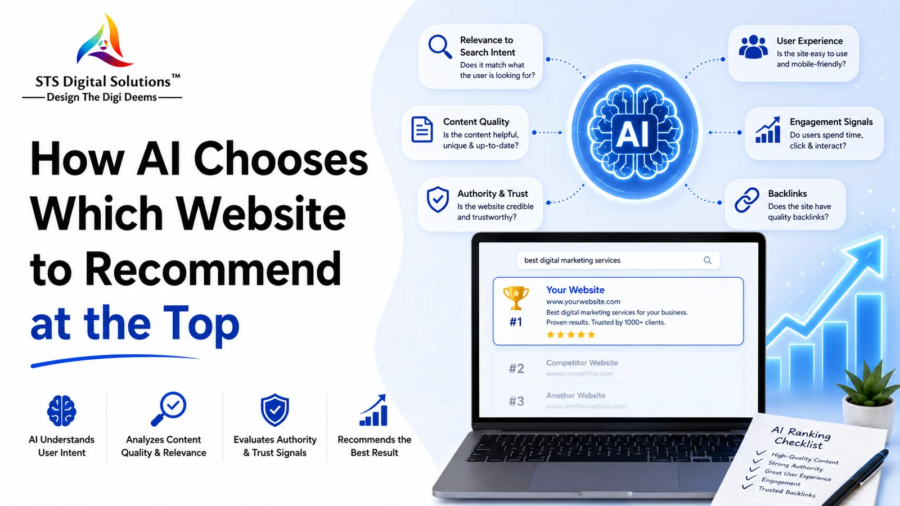
how ai chooses which website to recommend at the top (1)

How AI Picks the Top Website to Recommend

SEO helps D2C brands increase monthly sales by attracting high-intent customers through Google Search and AI-powered search experiences. When product pages, category pages, and content are optimized for search intent, businesses receive consistent organic traffic that continues even when advertising budgets are reduced.

Introduction

If someone had asked this question five years ago, the answer would have been simple:

“Rank #1 on Google and you’ll get the most traffic.”

That statement is no longer completely true.

Today, millions of users receive answers directly from Google AI Overview, Gemini, ChatGPT, and other AI-powered search platforms before they even click on a website.

Instead of showing ten blue links, AI tries to answer the user’s question immediately and then recommends a handful of trusted sources.

This creates a new challenge for businesses.

The question is no longer:

“How do I rank #1?”

The new question is:

How do I become one of the websites AI trusts enough to recommend?

At My Adwise, we believe this shift is one of the biggest changes in digital marketing since Google’s original search algorithm. Businesses that understand AI Search today will be better positioned to earn organic visibility over the next several years.

Search has evolved through several major stages.

Phase 1: Keyword Search

In the early days, search engines matched pages mainly by keywords. If a page repeated the target keyword often enough, it had a higher chance of ranking.

This led to practices like keyword stuffing, which produced poor user experiences.

Phase 2: Quality Content

Google introduced updates that rewarded useful, original, and trustworthy content. Websites needed to demonstrate expertise rather than simply repeat keywords.

Phase 3: AI-Powered Search

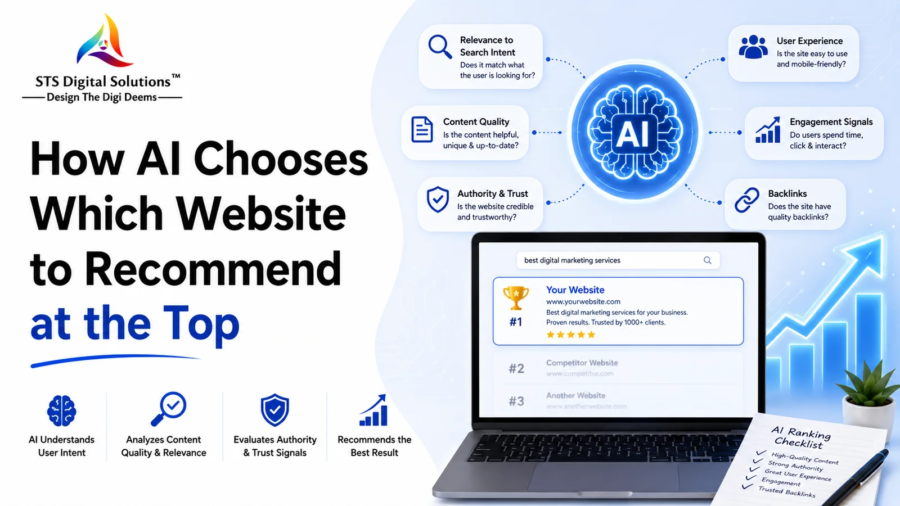
Today, AI goes beyond matching keywords. It tries to understand:

  • What the user is really asking.
  • Which sources are reliable.
  • Whether the information is complete.
  • Which content best solves the problem.

This is why traditional SEO alone is no longer enough.

What Does AI Actually Look For?

A common misconception is that AI recommends the website with the highest number of backlinks or the highest keyword density.

In reality, AI evaluates many signals together.

Some of the most important include:

  • Content quality
  • Search intent match
  • EEAT signals
  • Topical authority
  • Semantic relevance
  • Website trust
  • User experience
  • Content freshness
  • Internal linking
  • Structured organization

Think of AI as a researcher rather than a keyword counter. It wants to recommend information that is accurate, helpful, and easy for users to understand.

Factor #1: EEAT Is the Foundation

One of the strongest quality frameworks behind modern search is EEAT:

  • Experience
  • Expertise
  • Authoritativeness
  • Trustworthiness

These are not direct ranking factors by themselves, but they represent the qualities Google consistently encourages through its Search Quality guidance.

For example, a digital marketing agency that publishes practical insights, explains real-world strategies, keeps content updated, and clearly identifies its expertise is generally in a stronger position than a site that simply rewrites generic information.

For My Adwise, this means every article should answer one important question:

“Would a business owner trust us after reading this?”

If the answer is yes, you’re moving in the right direction.

Factor #2: Search Intent Matters More Than Keywords

Modern AI doesn’t just analyze the words on the page—it evaluates whether the content actually satisfies the user’s intent.

For example, someone searching:

“How AI Picks the Top Website to Recommend”

is not looking for a dictionary definition.

They want to understand:

  • How AI search works
  • Why some websites are recommended
  • What they can do to improve their own visibility
  • Practical strategies they can implement

A page that fully answers those questions is more valuable than a page that simply repeats the target keyword dozens of times.

Key Takeaways

  • AI search focuses on usefulness, not just keywords.
  • EEAT helps establish credibility and trust.
  • Matching user intent is more important than keyword repetition.
  • Businesses should create content that genuinely solves problems instead of only targeting rankings.
  • Long-term authority comes from consistent quality across your entire website.

How Google AI Overview Chooses Websites

Google AI Overview doesn’t recommend websites randomly. Every recommendation is based on multiple quality signals that help Google’s AI determine whether a page is accurate, trustworthy, and genuinely useful for users.

Unlike traditional search, where keyword optimization played a dominant role, AI-powered search focuses on understanding content quality, expertise, authority, and user intent before selecting a source.

In simple terms, Google’s AI asks one question:

“Which website provides the most complete, trustworthy, and helpful answer to this user’s question?”

If your content consistently answers that question better than competing pages, your chances of being referenced increase significantly.

AI Doesn't Read Content Like Humans

One of the biggest misconceptions in SEO is that AI reads an article from top to bottom the way people do.

It doesn’t.

Instead, AI analyzes the structure, context, relationships between topics, and overall usefulness of the content.

It evaluates questions such as:

  • Does this page answer the user’s question?
  • Is the information factually accurate?
  • Does the content demonstrate real expertise?
  • Is the website trustworthy?
  • Is the information well organized?
  • Does the page satisfy the search intent?
  • Is the content current and relevant?

These signals work together to help AI decide whether your website deserves to be recommended.

The Seven Signals AI Looks For

1. Experience

Google increasingly values evidence of first-hand experience.

Rather than publishing generic advice, demonstrate that you’ve worked on real projects or encountered real business challenges.

For example, instead of writing:

SEO is important for ecommerce websites.

A stronger statement would be:

During technical SEO audits for ecommerce websites, we’ve frequently found that poor internal linking and duplicate product descriptions limit organic visibility. Correcting these issues often improves crawl efficiency and strengthens long-term search performance.

This approach demonstrates practical experience instead of repeating common advice.

2. Expertise

Expertise is reflected in the depth and accuracy of your content.

A high-quality article should explain not only what something is, but also why it matters and how to implement it successfully.

Expert-level content typically includes:

  • Practical recommendations
  • Step-by-step guidance
  • Industry terminology explained clearly
  • Common mistakes
  • Actionable frameworks
  • Real examples

The goal is to educate readers—not simply fill a page with keywords.

3. Authority

Authority develops over time.

Google and AI systems are more likely to trust websites that consistently publish valuable information within a specific niche.

Authority grows through:

  • High-quality content
  • Comprehensive topic coverage
  • Internal content clusters
  • Mentions from reputable websites
  • Positive brand reputation
  • Consistent publishing

Instead of trying to become an authority on everything, focus on becoming the most reliable resource within your area of expertise.

4. Trustworthiness

Trust is one of the strongest signals influencing both users and search engines.

Your website should clearly communicate that it represents a legitimate business.

Important trust signals include:

  • HTTPS security
  • Clear contact information
  • About Us page
  • Author information
  • Privacy Policy
  • Terms and Conditions
  • Genuine customer reviews
  • Transparent business details

These elements help visitors—and AI systems—feel more confident about your content.

5. Helpful Content

Google’s Helpful Content system rewards content created primarily for people rather than search engines.

Every article should answer real questions, solve genuine problems, and provide practical value.

Avoid writing content simply to rank for keywords.

Instead, focus on helping the reader accomplish their goal.

When users leave your page feeling informed and confident, you’re aligning with the direction modern search is moving.

6. Content Depth

Google’s Helpful Content system rewards content created primarily for people rather than search engines.

Every article should answer real questions, solve genuine problems, and provide practical value.

Avoid writing content simply to rank for keywords.

Instead, focus on helping the reader accomplish their goal.

When users leave your page feeling informed and confident, you’re aligning with the direction modern search is moving.

The strongest pages cover a topic comprehensively while remaining easy to understand.

For example, a basic article about Shopify SEO may only define the concept.

A comprehensive guide would also explain:

  • Technical SEO
  • Collection page optimization
  • Product page optimization
  • Site architecture
  • Schema markup
  • Internal linking
  • AI Overview optimization
  • Common mistakes
  • Performance measurement

This level of depth provides significantly more value for readers.

7. User Satisfaction

Although Google doesn’t directly measure satisfaction as a single ranking factor, user behavior provides valuable feedback.

Positive engagement signals often include:

  • Longer time spent on the page
  • Higher click-through rates
  • Visitors exploring additional pages
  • Repeat visits
  • Increased branded searches

These behaviors suggest that users found the content useful, which supports long-term search performance.

The My Adwise AI SEO Framework™

At My Adwise, we follow a structured approach to creating AI-friendly content.

Our framework consists of eight core principles:

A — Answer Real Questions

Every page should solve a specific user problem rather than simply target a keyword.

I — Intent First

Understand why someone is searching before creating content.

E — Experience

Support recommendations with practical insights whenever possible.

E — Expertise

Publish content that demonstrates deep knowledge instead of surface-level summaries.

A — Authority

Build topical authority through connected content clusters, service pages, and educational resources.

T — Trust

Maintain transparency through accurate information, business credibility, and consistent quality.

S — Structure

Organize content using clear headings, logical flow, internal links, and easy-to-read formatting.

This framework helps create content that serves both human readers and AI-powered search systems.

Key Takeaways

Modern AI doesn’t recommend websites simply because they rank well for a keyword.

Instead, it evaluates whether a page is trustworthy, comprehensive, well-structured, and genuinely helpful.

Businesses that consistently publish experience-driven, high-quality content while building topical authority are better positioned to earn visibility in Google AI Overview and other AI-powered search experiences.

Entity SEO, Semantic SEO, and Topical Authority: The Future of AI Search

Search engines no longer evaluate individual keywords in isolation. Modern AI systems understand relationships between topics, concepts, brands, and entities to determine whether a website genuinely demonstrates expertise.

This is why three concepts have become increasingly important for businesses:

  • Entity SEO
  • Semantic SEO
  • Topical Authority

Together, these help AI understand what your website is about, whether it can be trusted, and when it should be recommended.

What Is Entity SEO?

An entity is a uniquely identifiable person, company, place, product, service, or concept.

Instead of relying only on keywords, Google’s AI understands entities and the relationships between them.

For example, if your agency regularly publishes content about:

  • SEO
  • Shopify SEO
  • Technical SEO
  • Local SEO
  • Content Marketing
  • Google Ads
  • Meta Ads
  • AI Overview
  • AEO
  • GEO

Google begins associating My Adwise with digital marketing expertise rather than viewing your website as a collection of unrelated pages.

That association becomes increasingly valuable as your content grows.

Why Semantic SEO Matters

Traditional SEO often focused on repeating one keyword throughout a page.

Semantic SEO focuses on covering an entire topic naturally.

Instead of repeating:

Shopify SEO

twenty times, a comprehensive article should naturally include related concepts such as:

  • Ecommerce SEO
  • Product Page Optimization
  • Collection Page SEO
  • Internal Linking
  • Structured Data
  • Core Web Vitals
  • Search Intent
  • AI Overview
  • Product Schema

This creates richer context and helps search engines understand the complete subject.

The result is content that feels more natural for readers while providing stronger contextual signals for AI.

Build Topical Authority, Not Isolated Articles

One excellent article rarely builds authority on its own.

Search engines look for consistent expertise across an entire website.

Instead of publishing random topics, organize your content into connected clusters.

For My Adwise, the structure might look like this:

Pillar Page

Supporting Articles

  • What Is Agentic SEO?
  • Why AEO and GEO Matter
  • How Google AI Overview Works
  • AI SEO for Ecommerce
  • AI SEO for Local Businesses
  • Technical SEO for AI Search
  • EEAT Best Practices
  • Semantic SEO Explained

Each supporting article should link back to the pillar page, while the pillar page links to the supporting resources.

This strengthens topical authority and helps search engines understand the depth of your expertise.

Schema Markup Helps AI Understand Your Content

Schema markup provides structured information that helps search engines interpret your pages more accurately.

Although schema alone won’t guarantee higher rankings, it improves clarity and supports rich search experiences.

For informational articles, consider implementing:

  • Article Schema
  • FAQ Schema
  • Breadcrumb Schema
  • Organization Schema
  • Author Schema

Combined with high-quality content, structured data improves how search engines interpret your website.

Common Mistakes That Prevent AI Recommendations

Many businesses unknowingly reduce their chances of appearing in AI-powered search by making avoidable mistakes.

Some of the most common include:

  • Publishing thin or generic AI-generated content without expert review.
  • Chasing keywords instead of solving user problems.
  • Ignoring EEAT principles.
  • Weak internal linking.
  • Outdated articles that are never refreshed.
  • Duplicate product or service descriptions.
  • Poor mobile experience.
  • Slow-loading pages.
  • Missing author information and business credibility signals.

Avoiding these issues is often just as important as publishing new content.

An AI SEO Checklist for 2026

Before publishing any article, ask yourself:

✓ Does it fully answer the user’s question?

✓ Does it demonstrate real expertise?

✓ Is the information accurate and current?

✓ Is the content organized with clear headings?

✓ Are important related topics covered naturally?

✓ Does the article include helpful internal links?

✓ Is the page fast and mobile-friendly?

✓ Have you added appropriate schema markup?

✓ Would you confidently recommend this article to a client?

If the answer to most of these questions is “yes,” you’re creating content that aligns with the direction of modern search.

Frequently Asked Questions

Can AI-generated content rank on Google?

Yes, but only if it is accurate, genuinely helpful, carefully reviewed, and enhanced with original insights. Publishing raw AI output without human expertise often results in lower-quality content.

Is SEO still relevant after Google AI Overview?

Absolutely.

SEO has not disappeared—it has evolved.

Businesses now need to optimize not only for traditional rankings but also for AI-powered search experiences.

Which matters more: backlinks or content?

Both remain important.

High-quality content establishes relevance and expertise, while authoritative backlinks strengthen credibility.

The strongest websites invest in both.

How often should AI SEO content be updated?

Review important pages every few months or whenever meaningful industry changes occur. Keeping content current improves accuracy and user trust.

Final Thoughts

The future of search isn’t about manipulating algorithms—it’s about becoming the most reliable source of information in your niche.

Businesses that consistently publish accurate, experience-driven, and user-focused content will be better positioned for both traditional Google Search and AI-powered discovery.

Rather than chasing every algorithm update, invest in creating resources that genuinely help people make better decisions.

That strategy is more sustainable, builds long-term authority, and creates stronger relationships with both users and search engines.

As AI continues to reshape how information is discovered, trust will become one of the most valuable competitive advantages any business can build.

Ready to Prepare Your Business for AI Search?

If you want your business to improve visibility in Google Search, Google AI Overview, and other AI-powered search platforms, the team at My Adwise can help.

We specialize in:

  • SEO Strategy
  • AI SEO
  • Answer Engine Optimization (AEO)
  • Generative Engine Optimization (GEO)
  • Technical SEO
  • Shopify SEO
  • Content Strategy
  • Digital Marketing Consulting

Our focus isn’t simply on increasing rankings—it’s on building long-term organic visibility that drives qualified traffic, generates leads, and supports sustainable business growth.

The businesses that adapt to AI search today will be the ones leading their industries tomorrow.

how seo helps d2c brands increase monthly sales

How SEO Helps D2C Brands Sell More Every Month

SEO helps D2C brands increase monthly sales by attracting high-intent customers through Google Search and AI-powered search experiences. When product pages, category pages, and content are optimized for search intent, businesses receive consistent organic traffic that continues even when advertising budgets are reduced.

Introduction

Every D2C founder wants one thing—more sales.

The common approach is to increase the advertising budget on Meta Ads or Google Ads. While paid campaigns can deliver quick results, they also come with one major drawback: the moment you stop spending, your traffic starts disappearing.

SEO works differently.

Instead of renting traffic through ads, SEO helps you build an organic asset that keeps bringing visitors month after month. A well-optimized website can generate qualified traffic, build trust, and reduce your customer acquisition cost over time.

At My Adwise, we’ve observed that many D2C brands focus only on advertising while overlooking the long-term value of organic search. The brands that invest in both SEO and paid marketing usually build a stronger and more sustainable growth engine.

Why SEO Is Important for D2C Brands

D2C customers rarely buy a product after seeing it only once.

They compare products, read reviews, search for alternatives, and look for buying guides before making a decision.

For example, a customer might search:

  • Best protein powder for beginners
  • Affordable skincare products for oily skin
  • Cotton oversized t-shirts for men
  • Best running shoes under ₹3000

If your website appears during these searches, you’re reaching people who already have buying intent.

That’s what makes SEO so valuable.

1. SEO Brings High-Intent Traffic

Unlike social media, search traffic usually comes from people actively looking for a solution.

Someone searching for “best organic face wash for acne” is much closer to purchasing than someone casually scrolling Instagram.

This means SEO often brings visitors who are more likely to convert.

2. Lower Customer Acquisition Cost (CAC)

As advertising costs continue to increase, many D2C brands struggle with profitability.

SEO helps reduce dependency on paid campaigns by generating free organic traffic over time.

Instead of paying for every visitor, your content and product pages continue attracting customers even after publication.

While SEO requires patience, it can significantly improve long-term marketing efficiency.

3. Product Pages Start Working Like Sales Pages

Unlike social media, search traffic usually comes from people actively looking for a solution.

Someone searching for “best organic face wash for acne” is much closer to purchasing than someone casually scrolling Instagram.

This means SEO often brings visitors who are more likely to convert.

Many online stores publish basic product pages with copied descriptions.

Google prefers pages that genuinely help users.

A high-performing product page should include:

  • Original product description
  • Benefits instead of only features
  • Customer FAQs
  • Reviews
  • Product images with optimized alt text
  • Related product recommendations
  • Clear return and shipping information

Better pages improve both rankings and user confidence.

4. Helpful Content Builds Trust

Customers don’t always search for products directly.

Many begin with questions such as:

  • Which skincare ingredients are safe?
  • How do I choose the right running shoes?
  • Which supplement is best for beginners?

Publishing helpful articles around these questions builds authority and introduces potential customers to your brand before they make a purchase.

5. Internal Linking Improves SEO

One of the most overlooked strategies is internal linking.

For example:

A blog about “How to Choose Running Shoes” should naturally link to:

  • Running shoe category page
  • Related products
  • Size guide
  • Product comparison article

This improves navigation for users and helps search engines understand your website structure.

6. AI Search Is Changing Ecommerce SEO

Google AI Overview and other AI-powered search platforms increasingly recommend trusted websites instead of simply listing links.

To improve your chances of being referenced:

  • Answer customer questions clearly.
  • Use simple language.
  • Keep information accurate and updated.
  • Demonstrate real expertise.
  • Organize content with proper headings.

This aligns with both AEO and GEO best practices.

Common SEO Mistakes D2C Brands Make

Many ecommerce businesses struggle because they:

  • Depend only on paid advertising.
  • Publish duplicate product descriptions.
  • Ignore technical SEO.
  • Skip keyword research.
  • Have slow-loading websites.
  • Forget internal linking.
  • Don’t update outdated content.

Avoiding these mistakes creates a stronger foundation for sustainable growth.

Practical SEO Checklist

Before publishing or updating your website, check that you have:

  • Unique product descriptions
  • Optimized title tags and meta descriptions
  • Fast page loading speed
  • Mobile-friendly design
  • Internal links between related pages
  • Helpful blog content
  • Optimized images
  • Product schema where applicable

Small improvements across multiple pages often produce meaningful long-term results.

Frequently Asked Questions

How long does SEO take for a D2C brand?

SEO is a long-term strategy. Many websites begin seeing improvements within a few months, but timelines vary based on competition, website quality, and consistent optimization.

Should D2C brands stop using paid ads?

No. SEO and paid advertising work best together. Paid ads provide immediate visibility, while SEO builds sustainable organic growth.

Does Shopify support SEO?

Yes. Shopify includes many SEO-friendly features, but achieving strong rankings still requires quality content, technical optimization, and a well-planned strategy.

Conclusion

SEO is more than a traffic channel—it’s a long-term growth strategy for D2C brands.

By optimizing product pages, publishing helpful content, improving technical SEO, and building topical authority, businesses can attract qualified visitors who are actively looking to buy.

Instead of relying only on advertising budgets, invest in SEO to create a sustainable source of organic traffic and monthly sales. The brands that balance paid marketing with strong organic visibility are often the ones that continue growing year after year.

Why Choose My Adwise?

At My Adwise, we help D2C and Shopify brands build long-term organic growth through SEO, AI Overview optimization, technical SEO, content strategy, and conversion-focused digital marketing. Our goal isn’t just to increase traffic—it’s to attract visitors who are more likely to become paying customers.

Ready to grow your D2C brand? Let’s build an SEO strategy that delivers sustainable traffic, stronger visibility, and measurable business growth.

how to rank product pages on google for d2c brands

How to Rank Product Pages on Google for D2C Brands

how to rank product pages on google for d2c brands

Learn practical, proven steps to help your D2C product pages rank higher and convert better on Google.
Getting a single product page to rank on Google feels harder than ranking a blog post, mainly because product pages are naturally thin on content, which is exactly what learning how to rank product pages on Google helps solve.

Table of Contents

1. Why Product Pages Struggle to Rank

2. Writing Descriptions That Actually Help SEO

3. Using Reviews and Structured Data

4. Internal Linking for Product Pages

5. Common Mistakes to Fix

Why Product Pages Struggle to Rank

Most product pages rely on manufacturer descriptions or short bullet points, giving search engines little unique content to understand and rank, especially when competitors sell identical products.

Writing Descriptions That Actually Help SEO

Writing original descriptions that answer real buyer questions, such as sizing concerns or common use cases, gives the page unique value that generic manufacturer copy simply cannot provide.

Using Reviews and Structured Data

Genuine customer reviews add fresh, relevant content over time, while structured data helps search engines display pricing, availability, and ratings directly in search results, improving both visibility and click through rate.

Internal Linking for Product Pages

Linking related products and relevant guide content back to a product page helps search engines understand its context within the wider site, which can support rankings for related search terms.

Common Mistakes to Fix

Duplicate descriptions across variants, missing alt text on product images, and slow loading pages are frequent issues that quietly prevent product pages from ranking as well as they could.

FAQ

Why don’t my product pages rank on Google?

Thin or duplicate content, missing structured data, and weak internal linking are common reasons product pages underperform.

Do product reviews help SEO?

Yes, genuine reviews add fresh, unique content and can improve trust signals for both users and search engines.

Should product descriptions be long?

They should be as long as needed to answer real buyer questions clearly, without unnecessary padding.

Does page speed affect product page rankings?

Yes, slow loading product pages can hurt both rankings and conversion rates.

Is structured data necessary for product pages?

It is not mandatory but strongly recommended, since it helps search engines display richer results.

Conclusion

Learning how to rank product pages on Google mainly comes down to giving each page genuine, original value rather than relying on default manufacturer content.

how ai chooses which website to recommend at the top

 How to Rank on Google’s AI Overview (2026 Guide)

Google Search is changing faster than ever. Instead of showing only a list of blue links, Google now uses AI Overview to generate quick, detailed answers for users. These AI-generated summaries often appear at the top of the search results, making them one of the most valuable positions for websites.

For businesses, bloggers, and digital marketers, appearing in Google’s AI Overview can lead to higher visibility, increased organic traffic, and more qualified leads. However, ranking there requires more than traditional SEO. Google now evaluates content quality, expertise, user experience, and trust before selecting sources for AI-generated answers.

In this guide, you’ll learn practical strategies to improve your chances of ranking in Google’s AI Overview.

What Is Google's AI Overview?

Google’s AI Overview is an AI-powered feature that provides summarized answers to user queries by combining information from multiple trusted sources. Instead of making users open several websites, Google delivers a comprehensive answer directly on the search page while linking to authoritative websites for additional information.

This means your content is no longer competing only for the first organic position. It’s competing to become one of the trusted sources that Google’s AI chooses to reference.

Why AI Overview Matters for SEO

Ranking in AI Overview offers several benefits:

  • Increased brand visibility
  • Higher click-through rates for trusted sources
  • Better authority in your niche
  • More qualified organic traffic
  • Long-term SEO growth

As AI-powered search continues to evolve, optimizing for AI Overview is becoming just as important as ranking on the first page of Google.

1. Create Content That Demonstrates Real Expertise

Google prioritizes content that reflects genuine experience and expertise.

Instead of rewriting information already available online, include practical examples, first-hand observations, case studies, or lessons learned from real projects.

For example, if you’re explaining SEO strategies, share actual optimization techniques you’ve implemented and the results they produced. This makes your content more credible and valuable.

2. Focus on Search Intent

Before writing any article, identify what users actually want.

For example, someone searching for “How to Rank Your Website on Google’s AI Overview” is looking for actionable strategies rather than a basic definition of AI Overview.

Structure your article around solving that specific problem.

Ask yourself:

  • What questions does the reader have?
  • What steps will help them?
  • What mistakes should they avoid?

Answering these questions improves user satisfaction and increases your chances of being referenced by AI.

3. Optimize for AEO (Answer Engine Optimization)

AI systems prefer content that answers questions clearly.

Use:

  • Short definitions
  • Bullet points
  • Numbered lists
  • Step-by-step guides
  • FAQ sections

Each section should answer one specific question directly before expanding into more detail.

This makes it easier for Google’s AI to extract accurate information.

4. Build Strong EEAT Signals

Google values:

Experience

Share practical insights based on real-world work.

Expertise

Demonstrate deep knowledge of your industry with accurate, well-explained information.

Authoritativeness

Publish consistent, high-quality content around your niche to establish topical authority.

Trustworthiness

Keep your content updated, cite reliable sources where appropriate, use HTTPS, and provide clear author information.

Strong EEAT signals significantly improve your credibility in Google’s ecosystem.

5. Use Semantic SEO

Avoid repeating the same keyword unnaturally.

Instead, naturally include related phrases such as:

  • AI Search Optimization
  • Google AI Search
  • AI-powered Search Results
  • Generative Search
  • Search Experience
  • Semantic Search
  • AI Search Ranking
  • Helpful Content
  • Entity SEO

Semantic relevance helps Google better understand your content’s context.

Keep your content updated, cite reliable sources where appropriate, use HTTPS, and provide clear author information.

Strong EEAT signals significantly improve your credibility in Google’s ecosystem.

6. Improve Technical SEO

Even excellent content may struggle if your website has technical issues.

Make sure your website:

  • Loads quickly
  • Works well on mobile devices
  • Uses HTTPS
  • Has clean URLs
  • Includes proper heading structure (H1, H2, H3)
  • Is easily crawlable by search engines

A fast, user-friendly website supports both traditional rankings and AI-driven visibility.

7. Publish Comprehensive Yet Easy-to-Read Content

AI prefers content that is complete but also well organized.

Use:

  • Clear headings
  • Short paragraphs
  • Simple language
  • Relevant examples
  • Tables or lists where appropriate

Avoid unnecessary jargon or filler content.

Common Mistakes to Avoid

Many websites fail to appear in AI Overview because they:

  • Focus only on keywords instead of user intent
  • Publish thin or outdated content
  • Ignore EEAT principles
  • Overuse AI-generated text without human editing
  • Neglect technical SEO
  • Lack topical authority

Avoiding these mistakes can significantly improve your chances of being selected as a trusted source.

Frequently Asked Questions

Can new websites rank in Google's AI Overview?

Yes. If your content is highly relevant, demonstrates expertise, and provides unique value, newer websites can also be referenced.

Does traditional SEO still matter?

Absolutely. AI Overview builds upon traditional SEO rather than replacing it. Strong technical SEO, quality content, and backlinks remain important.

Is AI-generated content enough?

No. Human editing, original insights, and real experience are essential for creating trustworthy content that aligns with Google’s quality standards.

Final Thoughts

Google’s AI Overview represents the next evolution of search. Instead of optimizing only for rankings, website owners must now optimize for usefulness, trust, and user satisfaction.

By combining EEAT, AEO, semantic SEO, and strong technical optimization, you can increase your chances of becoming one of the trusted sources that Google’s AI selects for its summaries.

The key is simple: create content that genuinely helps users, demonstrates expertise, and answers questions better than competing pages. As AI-powered search continues to grow, businesses that adapt early will have a significant competitive advantage.

diggitymarketing search engine optimization 4111000 1920

Why SEO Matters More Than Ever in 2026

diggitymarketing search engine optimization 4111000 1920

Search engines have become much better at understanding user intent instead of simply matching keywords. Artificial intelligence has improved search experiences, yet people still expect accurate, trustworthy, and helpful content.

Google continues emphasizing Experience, Expertise, Authoritativeness, and Trustworthiness, often called EEAT. Websites that demonstrate real expertise and provide valuable information have a greater chance of earning visibility.

Businesses that ignore SEO often become increasingly dependent on paid advertising, resulting in higher customer acquisition costs over time.

Key Benefits of SEO in 2026

1. Lower Customer Acquisition Cost

SEO helps reduce marketing expenses because organic traffic continues arriving without paying for every click.

For example, an ecommerce business investing in high quality product guides may receive thousands of monthly visitors even months after publishing the content.

2. Builds Long Term Brand Authority

People naturally trust websites that appear consistently in search results.

Publishing expert articles, answering customer questions, and updating existing content builds credibility over time.

3. Higher Quality Traffic

SEO attracts users who are already searching for solutions.

Someone searching for “best accounting software for small business” is much closer to making a purchase than someone who simply sees a random advertisement.

4. Better User Experience

Modern SEO encourages websites to improve loading speed, mobile usability, navigation, and content organization.

A better user experience benefits both visitors and search engines.

5. Supports Every Stage of the Customer Journey

SEO works throughout the buying process.

People search for educational articles, product comparisons, reviews, pricing information, and support documentation before making decisions

Mini Case Study

A local digital marketing agency began publishing detailed industry guides instead of short promotional articles.

Within twelve months, organic traffic increased steadily because the content answered specific customer questions. More qualified leads arrived through search without increasing advertising budgets.

Although results vary between industries, this example demonstrates why consistent SEO investment often produces lasting returns

SEO Compared With Other Marketing Channels

Marketing MethodAdvantagesLimitationsEfficiency Score
SEO Sustainable traffic, builds trust, lowers long term acquisition cost Requires patience and ongoing optimization 9.5 out of 10
Paid Advertising Immediate visibility and fast testing Stops producing traffic once spending ends 8 out of 10
Social Media Marketing Strong audience engagement Organic reach can fluctuate significantly 7.5 out of 10
Email Marketing Excellent for customer retention Depends on an existing subscriber list 8.5 out of 10

Common SEO Mistakes

Publishing Thin Content

Short articles with little value rarely perform well.

Ignoring Search Intent

Content should answer the actual question users are asking rather than simply repeating keywords.

Forgetting Technical SEO

Broken links, slow pages, and poor mobile performance reduce visibility.

Not Updating Existing Content

Refreshing successful articles often delivers better results than constantly publishing new ones.

Best Practices for Better Rankings

Focus on Helpful Content

Write articles that solve real problems.

Build Topic Authority

Cover related subjects instead of relying on isolated blog posts.

Improve Website Performance

Optimize loading speed, mobile responsiveness, and navigation.

Earn High Quality Backlinks

Natural backlinks from reputable websites remain an important ranking signal.

Measure Performance

Track impressions, clicks, rankings, conversions, and user behavior to identify improvement opportunities.

Warning and Disclaimer

SEO is not a guaranteed ranking system. Search engine algorithms change regularly, competition differs across industries, and results depend on website quality, content relevance, technical implementation, and market conditions. Avoid shortcuts such as keyword stuffing, purchased backlinks, or copied content because these practices may lead to ranking losses or search engine penalties.

Industry Insights

Based on my experience working with SEO for agency clients and owned media websites, businesses that consistently invest in educational content often achieve stronger long term growth than those relying only on paid campaigns.

Google’s Search Quality Evaluator Guidelines continue emphasizing content created by people with genuine expertise, while official guidance encourages websites to focus on helpful, reliable, and user centered content rather than writing solely for search engines.

Frequently Asked Questions

Is SEO still worth it in 2026?

Yes. SEO remains one of the most cost effective digital marketing strategies because it delivers sustainable organic traffic and long term brand visibility.

How long does SEO take to show results?

Most websites begin seeing measurable improvements within three to six months, although competitive industries may require more time.

Can AI replace SEO?

No. AI can assist with research and content creation, but successful SEO still requires human expertise, strategic planning, technical optimization, and original insights.

What is the biggest SEO ranking factor in 2026?

Helpful content that satisfies user intent, combined with strong technical performance and website authority, remains among the most important factors.

Is SEO better than paid advertising?

Neither is universally better. SEO provides sustainable long term growth, while paid advertising offers immediate visibility. Many successful businesses combine both strategies.

Conclusion

The benefits of SEO in 2026 extend far beyond search rankings. Effective Search Engine Optimization helps businesses attract qualified visitors, build trust, improve user experience, and reduce long term marketing costs. Although SEO requires patience and consistent effort, it remains one of the most reliable investments for sustainable digital growth.

why high growth brands choose shopify over other platforms

SEO for Shopify: The Complete Ranking Guide

why high growth brands choose shopify over other platforms

## Introduction

Shopify makes running a store simple, but ranking that store on Google requires deliberate effort, which is exactly what a proper Shopify SEO guide needs to walk through clearly rather than assuming the platform handles everything automatically.

## Table of Contents

1. Shopify Specific SEO Challenges

2. Optimizing Product and Collection Pages

3. Managing Duplicate Content Issues

4. Improving Site Speed on Shopify

5. Building Content Beyond Product Pages

## Shopify Specific SEO Challenges

Shopify’s URL structure and app driven duplicate pages can create technical SEO issues that store owners often overlook until rankings plateau unexpectedly.

## Optimizing Product and Collection Pages

Writing unique product descriptions, optimizing image alt text, and ensuring collection pages have genuine supporting content all contribute meaningfully to better rankings.

## Managing Duplicate Content Issues

Shopify can generate duplicate content through product variants and filtering options, making canonical tags and careful URL management important technical priorities.

## Improving Site Speed on Shopify

Reducing unnecessary apps, compressing images, and choosing a lightweight theme all help maintain the fast loading speed that both users and search engines favor.

## Building Content Beyond Product Pages

Adding blog content, buying guides, and FAQ pages gives a Shopify store more opportunities to rank for informational searches beyond direct product terms.

## FAQ

**Does Shopify have good SEO out of the box?**

Shopify provides a solid foundation, but meaningful ranking improvements require deliberate optimization beyond default settings.

**How do I fix duplicate content on Shopify?**

Using canonical tags correctly and managing variant and filter URLs carefully helps reduce duplicate content issues.

**Do Shopify apps slow down SEO performance?**

Excessive apps can slow site speed, which indirectly affects SEO performance, so using only necessary apps is recommended.

**Can I improve Shopify SEO without coding knowledge?**

Yes, many improvements, like content optimization and image alt text, do not require coding skills.

**How long does Shopify SEO take to show results?**

Similar to other platforms, meaningful results typically build over several months of consistent effort.

## Conclusion

Following a proper Shopify SEO guide means addressing platform specific technical issues alongside genuine content improvements, rather than relying on the platform alone to handle rankings.

0001 5159384847556800367

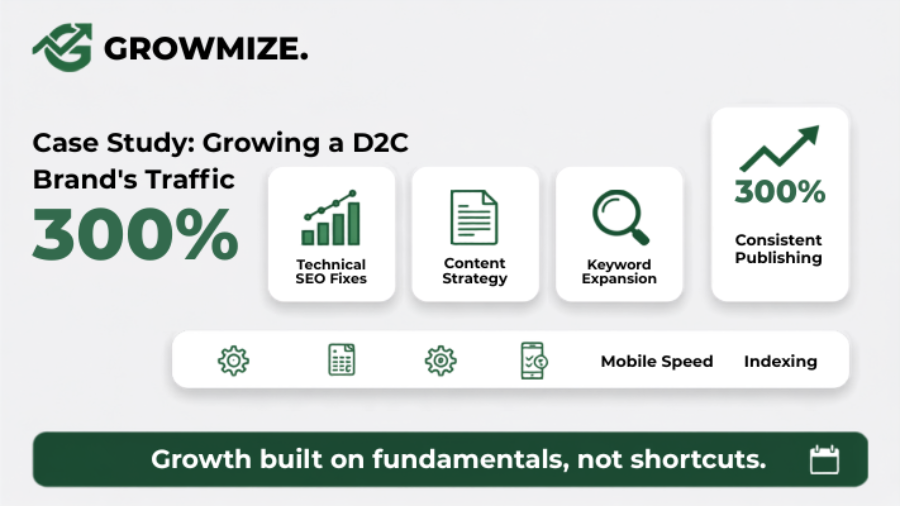
Case Study: Growing a D2C Brand’s Traffic by 300%

0001 5159384847556800367

Introduction

When a D2C brand came to us with strong products but weak visibility, the goal was straightforward on paper and difficult in practice, achieving D2C brand organic traffic growth without relying only on paid ads to drive every sale.

## Table of Contents

1. The Starting Point

2. Fixing the Foundation First

3. Content and Keyword Strategy

4. Technical Improvements That Mattered

5. Results and Key Lessons

## The Starting Point

The brand had decent product pages but almost no supporting content, weak internal linking, and several indexing issues that were quietly limiting visibility before any content strategy could even begin working.

## Fixing the Foundation First

Before writing new content, cleaning up crawl errors, fixing duplicate product URLs, and improving site speed created the technical base needed for future content to actually get indexed and ranked properly.

## Content and Keyword Strategy

Building category guides, comparison pages, and use case content around real customer questions helped capture search traffic beyond just branded and product specific terms, widening the funnel considerably.

## Technical Improvements That Mattered

Improving mobile load times and cleaning up thin, duplicate pages had a noticeable impact on how consistently the site appeared in search results, reinforcing that technical health directly supports content performance.

## Results and Key Lessons

Traffic grew steadily over several months rather than overnight, and the biggest lesson was that fixing technical issues first made every piece of new content perform better than it would have otherwise.

## FAQ

**How long did it take to see 300 percent traffic growth?**

The growth was gradual over several months, driven by consistent technical fixes and content publishing rather than a single change.

**What matters most for D2C organic traffic growth?**

A combination of technical health, useful supporting content, and clear product page optimization tends to matter most.

**Do paid ads still matter if organic traffic grows?**

Yes, organic and paid channels usually work best together rather than replacing one another entirely.

**What content works best for D2C brands?**

Comparison guides, use case content, and honest buying guides tend to perform well for D2C audiences.

**Can smaller D2C brands achieve similar growth?**

Yes, though timelines and results vary depending on competition, budget, and consistency of effort.

## Conclusion

Sustainable D2C brand organic traffic growth comes from fixing technical foundations first and then building genuinely useful content around real customer questions, not from shortcuts.