
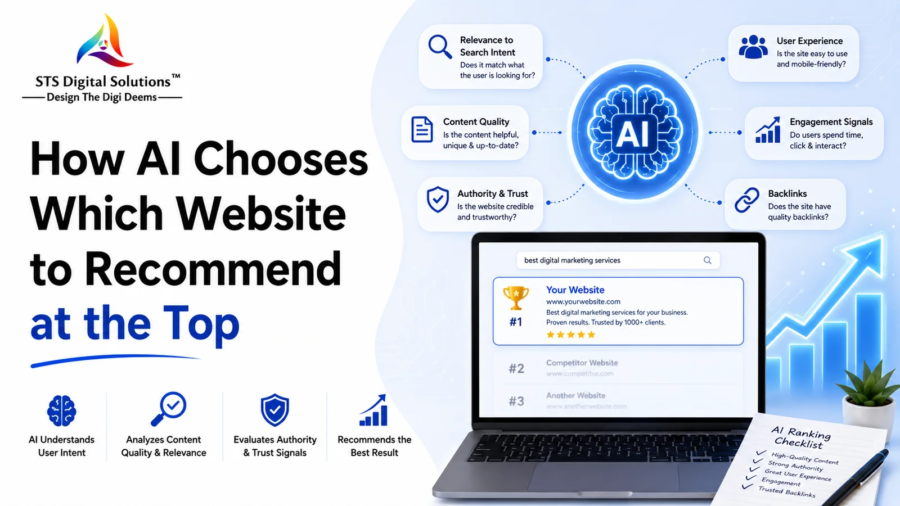
Google Search is changing faster than ever. Instead of showing only a list of blue links, Google now uses AI Overview to generate quick, detailed answers for users. These AI-generated summaries often appear at the top of the search results, making them one of the most valuable positions for websites.
For businesses, bloggers, and digital marketers, appearing in Google’s AI Overview can lead to higher visibility, increased organic traffic, and more qualified leads. However, ranking there requires more than traditional SEO. Google now evaluates content quality, expertise, user experience, and trust before selecting sources for AI-generated answers.
In this guide, you’ll learn practical strategies to improve your chances of ranking in Google’s AI Overview.
What Is Google's AI Overview?
Google’s AI Overview is an AI-powered feature that provides summarized answers to user queries by combining information from multiple trusted sources. Instead of making users open several websites, Google delivers a comprehensive answer directly on the search page while linking to authoritative websites for additional information.
This means your content is no longer competing only for the first organic position. It’s competing to become one of the trusted sources that Google’s AI chooses to reference.
Why AI Overview Matters for SEO
Ranking in AI Overview offers several benefits:
- Increased brand visibility
- Higher click-through rates for trusted sources
- Better authority in your niche
- More qualified organic traffic
- Long-term SEO growth
As AI-powered search continues to evolve, optimizing for AI Overview is becoming just as important as ranking on the first page of Google.
1. Create Content That Demonstrates Real Expertise
Google prioritizes content that reflects genuine experience and expertise.
Instead of rewriting information already available online, include practical examples, first-hand observations, case studies, or lessons learned from real projects.
For example, if you’re explaining SEO strategies, share actual optimization techniques you’ve implemented and the results they produced. This makes your content more credible and valuable.
2. Focus on Search Intent
Before writing any article, identify what users actually want.
For example, someone searching for “How to Rank Your Website on Google’s AI Overview” is looking for actionable strategies rather than a basic definition of AI Overview.
Structure your article around solving that specific problem.
Ask yourself:
- What questions does the reader have?
- What steps will help them?
- What mistakes should they avoid?
Answering these questions improves user satisfaction and increases your chances of being referenced by AI.
3. Optimize for AEO (Answer Engine Optimization)
AI systems prefer content that answers questions clearly.
Use:
- Short definitions
- Bullet points
- Numbered lists
- Step-by-step guides
- FAQ sections
Each section should answer one specific question directly before expanding into more detail.
This makes it easier for Google’s AI to extract accurate information.
4. Build Strong EEAT Signals
Google values:
Experience
Share practical insights based on real-world work.
Expertise
Demonstrate deep knowledge of your industry with accurate, well-explained information.
Authoritativeness
Publish consistent, high-quality content around your niche to establish topical authority.
Trustworthiness
Keep your content updated, cite reliable sources where appropriate, use HTTPS, and provide clear author information.
Strong EEAT signals significantly improve your credibility in Google’s ecosystem.
5. Use Semantic SEO
Avoid repeating the same keyword unnaturally.
Instead, naturally include related phrases such as:
- AI Search Optimization
- Google AI Search
- AI-powered Search Results
- Generative Search
- Search Experience
- Semantic Search
- AI Search Ranking
- Helpful Content
- Entity SEO
Semantic relevance helps Google better understand your content’s context.
Keep your content updated, cite reliable sources where appropriate, use HTTPS, and provide clear author information.
Strong EEAT signals significantly improve your credibility in Google’s ecosystem.
6. Improve Technical SEO
Even excellent content may struggle if your website has technical issues.
Make sure your website:
- Loads quickly
- Works well on mobile devices
- Uses HTTPS
- Has clean URLs
- Includes proper heading structure (H1, H2, H3)
- Is easily crawlable by search engines
A fast, user-friendly website supports both traditional rankings and AI-driven visibility.
7. Publish Comprehensive Yet Easy-to-Read Content
AI prefers content that is complete but also well organized.
Use:
- Clear headings
- Short paragraphs
- Simple language
- Relevant examples
- Tables or lists where appropriate
Avoid unnecessary jargon or filler content.
Common Mistakes to Avoid
Many websites fail to appear in AI Overview because they:
- Focus only on keywords instead of user intent
- Publish thin or outdated content
- Ignore EEAT principles
- Overuse AI-generated text without human editing
- Neglect technical SEO
- Lack topical authority
Avoiding these mistakes can significantly improve your chances of being selected as a trusted source.
Frequently Asked Questions
Can new websites rank in Google's AI Overview?
Yes. If your content is highly relevant, demonstrates expertise, and provides unique value, newer websites can also be referenced.
Does traditional SEO still matter?
Absolutely. AI Overview builds upon traditional SEO rather than replacing it. Strong technical SEO, quality content, and backlinks remain important.
Is AI-generated content enough?
No. Human editing, original insights, and real experience are essential for creating trustworthy content that aligns with Google’s quality standards.
Final Thoughts
Google’s AI Overview represents the next evolution of search. Instead of optimizing only for rankings, website owners must now optimize for usefulness, trust, and user satisfaction.
By combining EEAT, AEO, semantic SEO, and strong technical optimization, you can increase your chances of becoming one of the trusted sources that Google’s AI selects for its summaries.
The key is simple: create content that genuinely helps users, demonstrates expertise, and answers questions better than competing pages. As AI-powered search continues to grow, businesses that adapt early will have a significant competitive advantage.