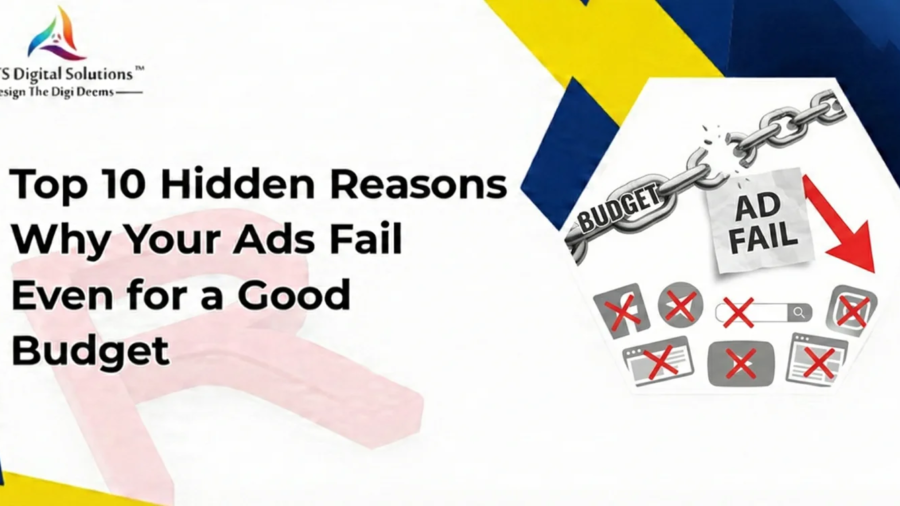
top 10 hidden reasons ads fail even good budget

Top 10 Hidden Reasons Your Ads Fail Even With a Good Budget (2026 Guide)

Advertising campaigns don’t fail simply because of limited budgets. In many cases, poor audience targeting, weak messaging, ineffective landing pages, inaccurate tracking, and low conversion rates prevent campaigns from delivering profitable results. Optimizing these areas often has a greater impact than increasing ad spend.

Introduction

One of the most common questions business owners ask is:

“Why aren’t my ads generating sales even though I’m spending a significant budget?”

The immediate reaction is often to increase spending.

However, a larger budget cannot fix a weak marketing strategy.

Successful advertising depends on multiple factors working together—from audience targeting and creative quality to landing page experience and accurate performance measurement.

At My Adwise, we’ve found that businesses often improve results not by spending more, but by identifying and fixing the hidden issues reducing campaign performance.

Let’s examine the ten most common reasons.

1. You're Targeting the Wrong Audience

Even the most creative advertisement cannot succeed if it reaches people with little or no interest in your offer.

Before launching campaigns, define:

  • Customer demographics
  • Interests
  • Buying intent
  • Pain points
  • Geographic targeting

Effective targeting improves both conversion rates and advertising efficiency.

2. Your Offer Isn't Strong Enough

Many businesses promote products without clearly explaining why customers should choose them.

A compelling offer answers questions such as:

  • What problem does this solve?
  • Why should someone choose your business?
  • What makes your offer different?
  • Why should customers act now?

Advertising amplifies your offer—it doesn’t create one.

3. Weak Ad Creatives

People scroll quickly through digital platforms.

Your creative must capture attention immediately.

High-performing ads typically include:

  • Strong headlines
  • Clear visuals
  • Customer-focused messaging
  • Simple calls to action
  • Consistent branding

Creative testing should be part of every advertising strategy.

4. Poor Landing Page Experience

A successful advertisement should lead to a page that continues the same message.

If visitors encounter:

  • Slow loading times
  • Confusing layouts
  • Weak headlines
  • Complex forms
  • Missing trust signals

they are less likely to convert.

Your landing page is just as important as your advertisement.

5. You're Measuring the Wrong Metrics

High impressions and clicks don’t necessarily indicate business success.

Focus on metrics that directly affect profitability:

  • Conversion rate
  • Cost per acquisition
  • Return on Ad Spend (ROAS)
  • Revenue
  • Qualified leads
  • Customer Lifetime Value (LTV)

These metrics provide a clearer understanding of campaign performance.

6. Tracking Isn't Configured Properly

Poor tracking often leads to poor decisions.

Without accurate conversion tracking, businesses may:

  • Scale ineffective campaigns.
  • Pause successful campaigns.
  • Misinterpret customer behavior.
  • Allocate budgets inefficiently.

Regular tracking audits help ensure data reliability.

7. You're Ignoring Customer Trust

Advertising creates awareness.

Trust creates customers.

Strengthen trust through:

  • Customer testimonials
  • Reviews
  • Case studies
  • Clear contact information
  • Secure website experience
  • Transparent policies

Customers are more likely to buy from businesses they perceive as trustworthy.

8. No Testing Strategy

Marketing should never rely on assumptions.

Test variables such as:

  • Headlines
  • Images
  • Videos
  • Calls to action
  • Landing page layouts
  • Audience segments

Continuous testing produces stronger long-term performance.

9. You're Depending Only on Paid Ads

Paid advertising should be one part of your marketing system—not the entire strategy.

Businesses that also invest in:

  • SEO
  • Content marketing
  • Email marketing
  • Customer retention
  • Organic social media

are generally better positioned for sustainable growth.

Diversification reduces dependence on rising advertising costs.

10. You're Optimizing Budget Instead of Strategy

Many advertisers ask:

“Should I increase my budget?”

A better question is:

“Why isn’t my current strategy converting?”

Before increasing spend, evaluate:

  • Audience quality
  • Offer strength
  • Landing page performance
  • Creative effectiveness
  • Conversion tracking
  • Website experience

Improving strategy often delivers better results than increasing budget alone.

The My Adwise Advertising Success Framework™

At My Adwise, every successful advertising campaign follows six stages:

1. Audience Research

Understand who your ideal customers are and what motivates their buying decisions.

2. Offer Development

Create an offer that solves a genuine problem and communicates clear value.

3. Creative Strategy

Develop persuasive advertisements aligned with customer intent and brand messaging.

4. Landing Page Optimization

Ensure every click leads to a page designed to convert visitors into customers.

5. Performance Measurement

Track meaningful business metrics instead of vanity metrics.

6. Continuous Optimization

Improve campaigns through ongoing testing, analysis, and refinement rather than relying on one-time changes.

Frequently Asked Questions

Why do my ads generate traffic but no sales?

This often results from issues such as poor audience targeting, weak offers, low-converting landing pages, or inaccurate tracking. Reviewing the entire customer journey usually reveals the underlying problem.

Should I increase my advertising budget if results are poor?

Not immediately.

First identify why your campaigns are underperforming. Improving strategy, messaging, or website experience may produce better returns than increasing spend.

Can SEO improve advertising performance?

Yes.

SEO and content marketing build trust, educate customers, and increase brand familiarity. These factors often improve the effectiveness of paid advertising campaigns over time.

Final Thoughts

Successful advertising isn’t determined by budget alone.

Businesses that understand their customers, create compelling offers, optimize landing pages, measure meaningful data, and continuously improve their campaigns are more likely to achieve profitable long-term growth.

Rather than asking how to spend more on advertising, ask how to create a better customer experience from the first impression to the final conversion.

That shift in mindset often makes the greatest difference.

Why Choose My Adwise?

At My Adwise, we help businesses improve advertising performance through strategic planning, audience research, Google Ads, Meta Ads, SEO, landing page optimization, conversion rate optimization (CRO), and AI-powered digital marketing.

Our objective isn’t simply to generate clicks.

We help businesses build marketing systems that attract qualified leads, improve conversions, reduce wasted ad spend, and support sustainable long-term growth.

Whether you’re launching your first campaign or scaling an established business, our team can help you transform advertising into a measurable growth engine.
top 10 mistakes businesses make while running meta campaigns

Top 10 Meta Ads Mistakes That Cost Businesses Money (2026 Guide)

Many businesses waste advertising budgets because they focus only on launching campaigns instead of building a complete advertising strategy. Avoiding common Meta Ads mistakes—such as poor audience targeting, weak creatives, and ineffective landing pages—can significantly improve campaign performance and return on investment.

Introduction

Meta Ads remain one of the most effective ways to reach potential customers on Facebook and Instagram.

However, simply increasing your advertising budget doesn’t guarantee better results.

Many businesses spend thousands on campaigns that generate clicks but very few conversions. In most cases, the issue isn’t the Meta Ads platform itself—it’s the strategy behind the campaigns.

At My Adwise, we’ve found that successful advertisers consistently optimize targeting, creatives, landing pages, and measurement rather than relying on guesswork.

Let’s look at the ten mistakes that most often reduce Meta Ads performance.

1. Targeting the Wrong Audience

Even excellent ad creatives struggle when shown to the wrong people.

Before launching campaigns, define:

  • Ideal customer profile
  • Interests and behaviors
  • Geographic location
  • Buying intent
  • Customer pain points

Reaching a smaller, more relevant audience is often more effective than targeting everyone.

2. Weak Ad Creatives

Creative quality has a major influence on campaign performance.

Effective creatives should:

  • Capture attention quickly.
  • Communicate one clear message.
  • Highlight customer benefits.
  • Include a strong call to action.
  • Match the landing page experience.

Regular creative testing helps identify what resonates with your audience.

3. Ignoring the Landing Page

A successful ad doesn’t end with the click.

If visitors arrive on a slow, confusing, or irrelevant landing page, conversions suffer.

A high-converting landing page should include:

  • Clear headline
  • Consistent messaging
  • Fast loading speed
  • Mobile-friendly design
  • Trust signals
  • Simple conversion path

Your ad and landing page should feel like one continuous experience.

4. Optimizing Too Early

Many advertisers make changes after only a short period.

Meta’s delivery system needs sufficient data before meaningful conclusions can be drawn.

Avoid making frequent adjustments before campaigns collect enough performance data.

Instead, review trends over time and make informed optimizations.

5. Focusing Only on Clicks

High click-through rates do not always indicate business success.

Measure metrics that matter, including:

  • Conversion rate
  • Cost per acquisition
  • Return on Ad Spend (ROAS)
  • Revenue generated
  • Qualified leads

Business outcomes are more valuable than vanity metrics.

6. Not Testing Creatives

Successful advertisers rarely rely on a single image or video.

Test variations of:

  • Headlines
  • Visuals
  • Ad copy
  • Calls to action
  • Formats

Consistent testing helps improve campaign efficiency over time.

7. Ignoring Retargeting

Many visitors need multiple interactions before making a purchase.

Retargeting campaigns help reconnect with people who have:

  • Visited your website
  • Viewed products
  • Added items to their cart
  • Engaged with your social content

This often produces stronger conversion rates than cold audience campaigns alone.

8. Neglecting Customer Journey

Ads should support the entire buying process.

Instead of immediately asking for a purchase, consider creating campaigns for:

  • Awareness
  • Consideration
  • Conversion
  • Customer retention

Matching campaigns to customer intent improves long-term performance.

9. Depending Only on Paid Ads

Paid advertising is powerful, but relying on it exclusively creates long-term risk.

Strong businesses also invest in:

  • SEO
  • Content marketing
  • Email marketing
  • Organic social media
  • Customer retention

Diversified marketing channels improve resilience and reduce dependence on advertising costs.

10. Failing to Measure and Improve

Campaign optimization is an ongoing process.

Regularly review:

  • Audience performance
  • Creative performance
  • Placement reports
  • Conversion data
  • Cost trends

Continuous improvement usually produces better results than constantly increasing budgets.

The My Adwise Meta Ads Framework™

Our Meta Ads strategy focuses on five connected stages:

  1. Research – Understand the audience and market.
  2. Creative – Develop compelling visuals and messaging.
  3. Campaign – Structure campaigns around clear objectives.
  4. Optimization – Improve targeting, creatives, and bidding based on data.
  5. Scaling – Increase investment only after consistent profitability is achieved.

This framework helps businesses grow sustainably rather than relying on short-term campaign wins.

Frequently Asked Questions

Why are my Meta Ads getting clicks but no sales?

Common reasons include weak landing pages, unclear offers, poor audience targeting, pricing issues, or a mismatch between the ad message and the landing page.

How often should Meta Ads be optimized?

Review campaigns regularly, but avoid making frequent changes before enough performance data has accumulated.

Should I use Meta Ads and SEO together?

Yes.

SEO builds long-term organic visibility, while Meta Ads generate immediate demand. Combining both creates a stronger and more sustainable marketing strategy.

Conclusion

Successful Meta advertising is about much more than launching campaigns.

Businesses that understand their audience, create strong creatives, optimize landing pages, measure meaningful metrics, and continuously improve performance are more likely to achieve profitable, long-term growth.

Instead of chasing quick wins, build a structured advertising system that supports your broader digital marketing strategy.

Why Choose My Adwise?

At My Adwise, we help businesses maximize the performance of Meta Ads through audience research, creative strategy, landing page optimization, conversion tracking, and data-driven campaign management.

Our goal is to help brands generate qualified leads, improve return on investment, and build sustainable growth through smarter digital advertising.

what is agentic seo and how ai agents are changing the way seo works

What Is Agentic SEO and How Is It Changing SEO? (2026 Guide)

Agentic SEO is an emerging approach to search optimization that uses AI-powered agents to assist with research, content planning, technical analysis, and workflow automation. Rather than replacing human SEO professionals, Agentic SEO combines AI efficiency with human expertise to create faster, more informed, and scalable optimization strategies.

Introduction

Search engine optimization is evolving faster than ever.

Over the last few years, marketers have adapted to Google’s Helpful Content updates, AI-powered search experiences, and increasing expectations around content quality.

Now, another concept is gaining attention:

Agentic SEO.

Unlike traditional SEO tools that simply provide reports or suggestions, AI agents are designed to perform multi-step tasks with minimal human intervention.

They can help analyze websites, identify optimization opportunities, organize research, generate structured recommendations, and assist with repetitive workflows.

However, one common misconception needs to be addressed immediately.

Agentic SEO is not about letting AI take complete control of your SEO strategy.

The businesses that will succeed are those that combine AI automation with experienced human decision-making.

What Is Agentic SEO?

Agentic SEO refers to the use of intelligent AI agents that can complete sequences of SEO-related tasks rather than responding to a single prompt.

Unlike traditional AI chatbots that answer one question at a time, AI agents can:

  • Analyze a website.
  • Identify technical SEO issues.
  • Suggest content opportunities.
  • Group keywords into clusters.
  • Recommend internal links.
  • Monitor optimization tasks.
  • Assist with reporting.

These capabilities make SEO workflows faster and more scalable.

How Agentic SEO Differs from Traditional SEO

Traditional SEO often follows a manual process:

  1. Research keywords.
  2. Analyze competitors.
  3. Create content briefs.
  4. Publish articles.
  5. Track rankings.
  6. Update content.

With Agentic SEO, AI can assist across multiple stages of this workflow.

For example, an AI agent may:

  • Identify keyword gaps.
  • Build a topical map.
  • Recommend article structures.
  • Detect internal linking opportunities.
  • Flag outdated pages for review.

Human experts still validate recommendations, refine strategy, and make final publishing decisions.

Why Agentic SEO Matters

Search engines are becoming more intelligent.

At the same time, websites are publishing larger volumes of content than ever before.

Managing hundreds of pages manually is increasingly difficult.

Agentic SEO helps businesses:

  • Save time on repetitive tasks.
  • Identify opportunities more efficiently.
  • Improve consistency across large websites.
  • Support ongoing optimization efforts.
  • Scale content operations responsibly.

The goal is not simply to create more content—but to manage SEO more effectively.

The Role of Human Expertise

One of the biggest mistakes businesses make is assuming AI can replace SEO professionals.

It cannot.

AI lacks:

  • Business context.
  • Industry experience.
  • Strategic judgment.
  • Creative storytelling.
  • Brand understanding.

Human expertise remains essential for:

  • Strategy development.
  • Content quality.
  • EEAT signals.
  • Brand positioning.
  • Ethical decision-making.

The strongest results come from collaboration between people and AI—not from replacing one with the other.

How Agentic SEO Supports AI Search

As AI-powered search platforms become more common, businesses need structured, accurate, and well-organized content.

Agentic SEO can help teams:

  • Maintain content quality at scale.
  • Keep important pages updated.
  • Strengthen internal linking.
  • Organize topic clusters.
  • Identify missing content opportunities.

These improvements contribute to better visibility in both traditional search and AI-powered search experiences.

How Agentic SEO Supports AI Search

As AI-powered search platforms become more common, businesses need structured, accurate, and well-organized content.

Agentic SEO can help teams:

  • Maintain content quality at scale.
  • Keep important pages updated.
  • Strengthen internal linking.
  • Organize topic clusters.
  • Identify missing content opportunities.

These improvements contribute to better visibility in both traditional search and AI-powered search experiences.

Real-World Applications of Agentic SEO

Agentic SEO is already helping marketing teams streamline complex workflows. While the technology continues to evolve, AI agents can support a wide range of SEO activities when used responsibly.

Some practical applications include:

Content Opportunity Discovery

Instead of manually reviewing hundreds of keywords, AI agents can identify:

  • Missing content topics
  • Keyword clusters
  • Competitor content gaps
  • Search intent patterns

This allows SEO teams to prioritize high-value content opportunities more efficiently.

Technical SEO Monitoring

Large websites often contain thousands of pages.

AI agents can assist by identifying:

  • Broken internal links
  • Missing metadata
  • Duplicate content
  • Crawl errors
  • Orphan pages
  • Redirect issues

Human review is still necessary before implementing technical changes, but AI significantly reduces the time required to identify problems.

Content Refresh Recommendations

Publishing content is only the beginning.

As industries change, important pages should be updated regularly.

AI agents can highlight:

  • Outdated statistics
  • Broken external links
  • Missing sections
  • Declining search performance
  • Opportunities to improve topical coverage

This helps businesses maintain content quality over time.

Internal Linking Suggestions

Strong internal linking improves navigation and helps search engines understand relationships between pages.

AI agents can identify relevant opportunities by analyzing existing content and suggesting logical connections.

For example:

  • Blog articles linking to service pages
  • Pillar guides connecting with supporting articles
  • Product pages linking to buying guides
  • Related resources connecting naturally

Human editors should always review these suggestions to ensure they provide genuine value.

Common Misconceptions About Agentic SEO

As with any emerging technology, several myths have developed around Agentic SEO.

Myth 1: AI Will Replace SEO Professionals

Reality:

AI improves efficiency, but it cannot replace strategic thinking, business understanding, creativity, or human expertise.

SEO professionals remain responsible for planning, decision-making, and quality assurance.

Myth 2: More AI Content Means Better Rankings

Publishing large volumes of AI-generated content does not automatically improve search visibility.

Search engines increasingly reward:

  • Original insights
  • Helpful information
  • Practical expertise
  • Strong user experience
  • Demonstrated credibility

Quality remains more important than quantity.

Myth 3: Automation Solves Every SEO Problem

Automation supports execution.

Strategy still requires human judgment.

Businesses that combine AI with experienced marketers generally achieve stronger long-term results than those relying entirely on automation.

Best Practices for Using Agentic SEO

To gain the greatest value from AI agents:

  • Review every important recommendation before implementation.
  • Use AI to improve productivity rather than replace expertise.
  • Maintain consistent editorial standards.
  • Refresh high-value content regularly.
  • Build topic clusters instead of isolated articles.
  • Focus on solving customer problems rather than producing more pages.

These practices help businesses use AI responsibly while maintaining quality.

The My Adwise Agentic SEO Framework™

At My Adwise, we believe Agentic SEO should support people—not replace them.

Our framework follows five principles.

1. Research

Use AI agents to collect information, organize keyword clusters, and identify opportunities.

2. Strategy

Human SEO specialists evaluate opportunities based on business objectives, competition, and customer needs.

3. Content

Create experience-driven, original content that demonstrates expertise while answering genuine user questions.

4. Optimization

  • Internal linking
  • Technical SEO
  • Content freshness
  • Structured data
  • User experience

SEO should evolve as your business grows.

5. Measurement

  • Track meaningful business metrics such as:

    • Organic traffic
    • Qualified leads
    • Conversion rate
    • Topical authority
    • AI search visibility
    • Revenue generated through organic search

    These metrics provide a clearer picture of long-term SEO success than rankings alone.

The Future of Agentic SEO

  • Agentic SEO is likely to become an important part of modern digital marketing.

    However, the future is unlikely to belong to fully automated SEO systems.

    Instead, successful businesses will combine:

    • AI-assisted research
    • Human expertise
    • High-quality content
    • Continuous optimization
    • Ethical marketing practices

    As AI search continues to evolve, businesses that invest in both technology and expertise will be better positioned to adapt.

Frequently Asked Questions

Is Agentic SEO replacing traditional SEO?

No.

Agentic SEO builds on traditional SEO by improving workflow efficiency. The fundamental principles of creating helpful, trustworthy, and technically sound websites remain unchanged.

Is Agentic SEO suitable for small businesses?

Yes.

Small businesses can use AI agents to save time on research, planning, and repetitive SEO tasks while continuing to rely on human judgment for strategic decisions.

Does Google support AI-generated content?

Google evaluates content based on quality rather than how it was created. Helpful, accurate, and original content can perform well regardless of whether AI assisted in the drafting process.

Final Thoughts

Agentic SEO represents the next stage in the evolution of search optimization.

Rather than replacing marketers, AI agents allow businesses to work more efficiently by automating repetitive tasks and supporting better decision-making.

The competitive advantage will not come from using AI alone.

It will come from combining intelligent automation with genuine expertise, thoughtful strategy, and a commitment to creating content that genuinely helps users.

Businesses that embrace this balanced approach will be better prepared for the future of AI-powered search.

Why Choose My Adwise?

At My Adwise, we combine human expertise with AI-powered workflows to help businesses build sustainable organic growth.

Our services include:

  • AI SEO Strategy
  • Technical SEO
  • Content Strategy
  • Answer Engine Optimization (AEO)
  • Generative Engine Optimization (GEO)
  • Shopify SEO
  • Local SEO
  • SEO Consulting

We don’t use AI to replace strategic thinking.

We use it to enhance research, improve efficiency, and help businesses create high-quality digital experiences that attract qualified traffic and support long-term growth.

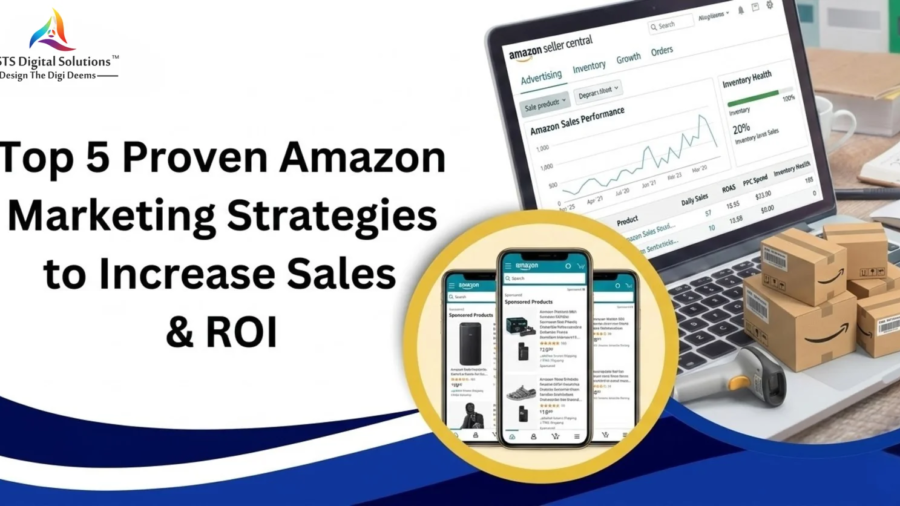
top 5 proven amazon marketing strategies to increase sales and roi

Top 5 Amazon Marketing Tips to Increase Sales and Improve ROI (2026 Guide)

Amazon marketing success depends on more than running advertising campaigns. Sellers who optimize their product listings, improve organic visibility, manage PPC campaigns strategically, build customer trust, and regularly analyze performance are more likely to increase sales while improving long-term return on investment.

Introduction

Selling on Amazon has become increasingly competitive.

Every day, thousands of new products enter the marketplace, making it more difficult for sellers to stand out. Simply launching a product and running Amazon Ads is rarely enough to achieve sustainable growth.

Successful Amazon businesses combine listing optimization, organic visibility, paid advertising, customer trust, and continuous performance analysis to improve both sales and profitability.

At My Adwise, we believe Amazon marketing should be treated as a complete growth strategy rather than a single advertising campaign.

Here are five practical strategies that can help sellers improve performance in 2026.

1. Optimize Every Product Listing

Your product listing acts as your sales page.

Even highly targeted advertising will struggle if the listing fails to answer customer questions or build confidence.

A well-optimized listing should include:

  • A clear, keyword-focused product title.
  • High-quality product images.
  • Informative bullet points highlighting customer benefits.
  • A detailed product description.
  • Accurate product specifications.
  • Relevant backend search terms where applicable.

Instead of describing only product features, explain how the product solves a customer’s problem.

A strong listing improves both organic visibility and conversion rates.

2. Build a Balanced Amazon PPC Strategy

Amazon PPC is valuable, but it should support profitability rather than consume your entire marketing budget.

A balanced strategy typically includes:

  • Automatic campaigns for keyword discovery.
  • Manual campaigns for high-performing search terms.
  • Regular search term analysis.
  • Ongoing bid optimization.
  • Careful monitoring of Advertising Cost of Sales (ACoS).

Rather than increasing budgets continuously, focus on improving campaign efficiency through data-driven decisions.

3. Strengthen Customer Trust

Trust directly influences purchasing decisions.

Customers are more likely to buy products that provide clear information and demonstrate credibility.

Important trust-building elements include:

  • High-quality images from multiple angles.
  • Honest product descriptions.
  • Competitive pricing.
  • Genuine customer reviews.
  • Accurate delivery expectations.
  • Prompt customer support.

Avoid exaggerated claims or misleading descriptions, as they can increase returns and reduce long-term customer confidence.

4. Use Data to Improve Performance

Successful Amazon sellers make decisions based on performance data rather than assumptions.

Monitor metrics such as:

  • Click-Through Rate (CTR)
  • Conversion Rate
  • Advertising Cost of Sales (ACoS)
  • Return on Ad Spend (ROAS)
  • Organic keyword rankings
  • Inventory performance

Reviewing these metrics regularly helps identify opportunities for improvement and optimize future campaigns.

5. Build Your Brand Beyond Amazon

While Amazon is an excellent marketplace, depending entirely on one platform creates business risk.

Strong brands also invest in:

  • SEO
  • Content marketing
  • Email marketing
  • Social media
  • Brand websites
  • Customer communities

Diversifying traffic sources reduces dependence on marketplace algorithms and creates more sustainable long-term growth.

Common Amazon Marketing Mistakes

Many sellers reduce profitability by:

  • Ignoring listing optimization.
  • Running PPC without analyzing performance.
  • Using low-quality product images.
  • Neglecting customer reviews.
  • Failing to optimize product titles and descriptions.
  • Depending entirely on paid advertising.

Correcting these issues often improves both visibility and conversions.

The My Adwise Amazon Growth Framework™

At My Adwise, we recommend focusing on five core pillars:

  1. Listing Optimization – Improve visibility and conversions.
  2. Amazon PPC – Generate targeted traffic efficiently.
  3. Customer Trust – Increase confidence through quality listings and reviews.
  4. Performance Analytics – Make data-driven improvements.
  5. Brand Growth – Build marketing channels beyond Amazon.

Together, these pillars help sellers create a stronger and more resilient ecommerce business.

Frequently Asked Questions

Is Amazon PPC necessary for new sellers?

Advertising can help new products gain visibility, but success also depends on strong listings, competitive pricing, and positive customer experiences.

What is more important: SEO or PPC on Amazon?

Both play important roles. PPC provides immediate visibility, while listing optimization and organic rankings support long-term profitability.

How often should Amazon listings be updated?

Review important listings regularly, especially when customer behavior, competition, or marketplace trends change.

Conclusion

Increasing Amazon sales is not about spending more on advertising—it’s about building a complete marketing system.

Optimized listings, strategic PPC campaigns, customer trust, and continuous performance analysis work together to improve visibility, conversions, and return on investment.

Businesses that consistently refine these areas are better positioned to grow sustainably in an increasingly competitive marketplace.

Why Choose My Adwise?

At My Adwise, we help ecommerce businesses grow through Amazon marketing strategy, SEO, AI-powered search optimization, content marketing, technical SEO, and performance-driven digital marketing.

Our objective is to help brands build long-term visibility, improve profitability, and create sustainable growth across multiple digital channels.

seo for shopify the ultimate guide to higher rankings

The Complete Guide to Better Shopify SEO Rankings (2026)

Improving Shopify SEO rankings requires more than adding keywords to product pages. Successful Shopify stores combine technical SEO, optimized product and collection pages, internal linking, high-quality content, schema markup, and an excellent user experience to increase organic visibility and attract qualified customers.

Introduction

Launching a Shopify store is easier than ever.

Ranking it on Google is the real challenge.

Thousands of new Shopify stores go live every month, yet only a small percentage generate consistent organic traffic. Many businesses rely heavily on paid advertising because their websites never become visible in search results.

The problem usually isn’t Shopify itself.

In most cases, poor SEO implementation prevents search engines from fully understanding the website.

At My Adwise, we’ve audited numerous ecommerce websites and noticed the same recurring issues: duplicate product descriptions, weak internal linking, thin category pages, slow-loading images, and a lack of helpful content.

The good news is that these problems are fixable.

In this guide, you’ll learn the strategies that help Shopify stores improve search visibility, attract high-intent visitors, and build long-term organic growth.

Why Shopify SEO Matters

Many online businesses focus only on paid advertising because it delivers immediate traffic.

However, paid campaigns stop producing visitors as soon as the advertising budget ends.

SEO works differently.

Once important pages begin ranking, they can continue attracting qualified visitors for months or even years with regular maintenance.

For ecommerce brands, this means:

  • Lower dependence on paid advertising
  • Better long-term return on investment
  • Higher brand visibility
  • More qualified purchase-intent traffic
  • Sustainable business growth

SEO is not a replacement for paid advertising—it is a long-term growth asset.

How Google Understands a Shopify Store

Google doesn’t rank an online store simply because it sells good products.

It evaluates whether the website provides a helpful experience.

Search engines analyze multiple factors, including:

  • Website structure
  • Product relevance
  • Content quality
  • Internal linking
  • Technical performance
  • User experience
  • Trust signals

When these elements work together, Google can better understand your store and match it with relevant search queries.

Pillar 1: Technical SEO

Technical SEO forms the foundation of every successful Shopify website.

Even the best content struggles to perform if search engines cannot crawl, understand, or index important pages efficiently.

Key technical priorities include:

Website Speed

Fast-loading websites improve both user experience and search performance.

Compress images, remove unnecessary apps, and regularly review page performance.

Mobile Experience

Most ecommerce traffic now comes from mobile devices.

Ensure every page is easy to navigate, loads quickly, and provides a seamless shopping experience across screen sizes.

Crawlability

Help search engines discover important pages through:

  • XML sitemaps
  • Logical navigation
  • Clean internal linking
  • Proper robots.txt configuration where appropriate

HTTPS Security

A secure website increases user confidence and supports modern search expectations.

Pillar 2: Keyword Research Based on Buying Intent

Many Shopify stores target only broad, highly competitive keywords.

Instead, focus on search queries that indicate purchase intent.

For example, rather than targeting:

Running Shoes

consider supporting keywords such as:

  • Best running shoes for beginners
  • Lightweight running shoes
  • Waterproof running shoes
  • Running shoes under ₹5,000
  • Running shoes for marathon training

These keywords often attract visitors who are much closer to making a purchase.

A secure website increases user confidence and supports modern search expectations.

Pillar 3: Product Page SEO

Every product page should help customers make confident buying decisions.

Instead of using manufacturer descriptions, create original content that explains:

  • Product benefits
  • Key features
  • Materials or specifications
  • Usage recommendations
  • Frequently asked questions
  • Shipping and return information

A well-optimized product page serves both search engines and potential customers.

Pillar 4: Collection Page SEO

Many Shopify store owners spend most of their time optimizing product pages while completely overlooking collection pages.

This is a missed opportunity.

Collection pages often target broader, high-volume search terms that customers use when they haven’t yet decided which product to buy.

For example:

Instead of targeting only:

Men’s Running Shoes

Create a well-optimized collection page targeting:

  • Best Running Shoes for Men
  • Lightweight Running Shoes
  • Running Shoes for Beginners
  • Premium Running Shoes

A high-performing collection page should include:

  • A unique introduction (200–400 words)
  • Clear category descriptions
  • Internal links to featured products
  • Customer-focused FAQs
  • Helpful buying advice
  • Optimized title tags and meta descriptions

Avoid creating thin collection pages that contain only product grids with little or no supporting content.

Pillar 5: Content Marketing for Shopify

Many ecommerce brands underestimate the value of educational content.

Customers often begin their buying journey with questions rather than product searches.

For example:

Instead of searching:

Buy Protein Powder

They may search:

  • Which protein powder is best for beginners?
  • Whey vs Plant Protein
  • How much protein should I take daily?

Publishing content that answers these questions allows your store to reach customers earlier in the buying journey.

Useful content formats include:

  • Buying guides
  • Product comparisons
  • How-to articles
  • Industry trends
  • Maintenance guides
  • Frequently asked questions

Every article should naturally link to relevant products and collections.

Pillar 6: Internal Linking Strategy

Pillar 7: Product Schema

Internal linking is one of the most overlooked Shopify SEO opportunities.

A well-planned internal linking structure helps search engines understand the relationship between pages while guiding customers toward relevant products.

For example:

Buying Guide

Collection Page

Product Page

Related Products

Blog Articles

This creates a logical content ecosystem instead of isolated pages competing for attention.

Best practices include:

  • Link related products together.
  • Connect blogs with collections.
  • Link collections to buying guides.
  • Avoid excessive or irrelevant links.
  • Use descriptive anchor text that accurately reflects the destination.

Structured data helps search engines better understand your products.

Important Product Schema properties include:

  • Product name
  • Brand
  • Price
  • Availability
  • Reviews
  • Ratings
  • Images

Although schema is not a direct ranking factor, it improves search understanding and may enhance how products appear in search results.

Ensure structured data is accurate and updated whenever product information changes.

Pillar 8: Image SEO

Images influence both search performance and user experience.

Optimize product images by:

  • Compressing large files.
  • Using descriptive filenames.
  • Writing meaningful alt text.
  • Showing multiple product angles.
  • Including lifestyle photography where appropriate.

For example, instead of:

IMG001.jpg

Use:

mens-black-running-shoes.jpg

Descriptive filenames and alt text improve accessibility while helping search engines interpret image content.

Pillar 9: Core Web Vitals

Google considers overall page experience an important quality signal.

Although Core Web Vitals are only one part of SEO, improving performance creates a better experience for visitors.

Focus on:

  • Faster page loading
  • Stable page layout
  • Responsive interactions
  • Optimized images
  • Efficient theme performance

Regular performance testing helps identify technical issues before they affect user experience.

AI Search and Shopify SEO

As AI-powered search continues to evolve, Shopify stores should optimize content for both traditional search engines and AI-generated search experiences.

Helpful strategies include:

  • Answer customer questions directly.
  • Add FAQs to important pages.
  • Write clear product descriptions.
  • Organize content with logical headings.
  • Build topical authority through educational content.
  • Strengthen EEAT across the website.

The objective is to create pages that are useful for people while remaining easy for AI systems to understand.

Common Shopify SEO Mistakes

Many stores struggle because they:

  • Copy manufacturer descriptions.
  • Publish duplicate content.
  • Ignore collection page optimization.
  • Skip internal linking.
  • Use oversized images.
  • Install too many apps that slow the website.
  • Publish inconsistent blog content.
  • Neglect technical SEO audits.

Avoiding these mistakes often provides quicker improvements than constantly publishing new pages.

Stage 1: Build a Strong Technical Foundation

Before focusing on rankings, ensure your store is technically healthy.

Prioritize:

  • Fast page speed
  • Mobile-first design
  • Secure HTTPS
  • Clean navigation
  • XML sitemap
  • Proper indexing
  • Crawl efficiency

A technically optimized website allows search engines to discover and understand your content more effectively.

Stage 2: Understand Customer Search Intent

Successful ecommerce SEO starts with understanding how customers search.

Instead of targeting only high-volume keywords, identify search intent throughout the buying journey.

Examples include:

Informational Intent

  • How to choose running shoes
  • Best skincare routine
  • Cotton vs polyester t-shirts

Commercial Intent

  • Best running shoes under ₹5,000
  • Premium skincare products
  • Oversized t-shirts for men

Transactional Intent

  • Buy running shoes online
  • Order protein powder
  • Purchase organic face wash

Creating content for each stage increases visibility across the entire customer journey.

Stage 3: Build Topical Authority

Rather than publishing isolated product pages, organize content into topic clusters.

Example:

Pillar Topic

Running Shoes

Supporting Content

  • Buying Guide
  • Size Guide
  • Product Comparison
  • Cleaning Guide
  • Marathon Shoe Guide
  • Beginner Running Tips

This structure demonstrates expertise while strengthening internal linking.

Stage 4: Optimize Every Important Page

Every page should serve a purpose.

Product pages should:

  • Explain benefits
  • Answer customer questions
  • Include reviews
  • Display trust signals
  • Link to related products

Collection pages should:

  • Target category-level keywords
  • Include unique introductory content
  • Guide customers toward the right products

Blog articles should:

  • Solve customer problems
  • Educate readers
  • Support product discovery
  • Link naturally to collections and products

Stage 5: Build Trust

Trust influences both customers and search engines.

Strengthen trust through:

  • Clear contact information
  • About Us page
  • Secure checkout
  • Transparent return policy
  • Genuine customer reviews
  • Accurate product information
  • Consistent branding

Trust is one of the strongest long-term competitive advantages for ecommerce businesses.

Stage 5: Build Trust

Trust influences both customers and search engines.

Strengthen trust through:

  • Clear contact information
  • About Us page
  • Secure checkout
  • Transparent return policy
  • Genuine customer reviews
  • Accurate product information
  • Consistent branding

Trust is one of the strongest long-term competitive advantages for ecommerce businesses.

Stage 6: Measure and Improve Continuously

SEO is an ongoing process.

Review your Shopify store regularly.

Monitor:

  • Organic traffic
  • Keyword rankings
  • Product page performance
  • Collection page visibility
  • Conversion rates
  • Revenue from organic search
  • Google Search Console reports

Continuous improvement produces better long-term results than one-time optimization.

Shopify SEO Checklist

Before publishing or updating your store, confirm that you have:

✓ Original product descriptions

✓ Optimized collection pages

✓ Fast loading speed

✓ Mobile-friendly experience

✓ Internal links between related pages

✓ Product schema

✓ Optimized image filenames

✓ Descriptive image alt text

✓ Helpful blog content

✓ Updated metadata

✓ Clear navigation

✓ Strong trust signals

Completing this checklist creates a solid SEO foundation for sustainable growth.

Frequently Asked Questions

Is Shopify good for SEO?

Yes.

Shopify offers a strong technical foundation for SEO. However, success depends on content quality, technical optimization, internal linking, user experience, and long-term consistency.

How long does Shopify SEO take?

SEO is a long-term investment.

Some improvements may become visible within a few months, but meaningful growth depends on competition, website quality, and ongoing optimization.

Should every Shopify store have a blog?

In many cases, yes.

Educational blog content helps answer customer questions, build topical authority, and support product pages through internal linking.

Can AI-generated product descriptions rank?

AI can assist with drafting content, but product descriptions should always be reviewed, expanded, and refined with original insights to ensure accuracy, uniqueness, and usefulness.

Long-Term Shopify SEO Strategy

Businesses often ask:

“What is the secret to Shopify SEO?”

There isn’t one.

Successful stores consistently improve every part of the customer experience.

Instead of chasing shortcuts, focus on:

  • Publishing helpful content.
  • Improving website performance.
  • Strengthening topical authority.
  • Optimizing technical SEO.
  • Updating important pages regularly.
  • Monitoring search performance.
  • Earning customer trust.

Over time, these improvements create a stronger organic presence that is difficult for competitors to replicate.

Final Thoughts

Shopify provides an excellent platform for building a successful ecommerce business, but technology alone does not generate rankings.

Long-term SEO success comes from combining technical excellence, helpful content, customer-focused optimization, and continuous improvement.

Businesses that consistently invest in these areas are more likely to attract qualified visitors, improve conversions, and build sustainable organic growth.

Instead of viewing SEO as a one-time project, treat it as an ongoing business investment that becomes more valuable over time.

Why Choose My Adwise?

At My Adwise, we help Shopify and D2C brands improve their organic visibility through technical SEO, content strategy, AI Search Optimization, Answer Engine Optimization (AEO), Generative Engine Optimization (GEO), conversion optimization, and long-term ecommerce growth strategies.

Our approach focuses on more than rankings.

We help businesses build search visibility that attracts qualified customers, increases conversions, and supports sustainable revenue growth.

Whether you’re launching your first Shopify store or scaling an established ecommerce brand, our team can help you create an SEO strategy designed for long-term success.

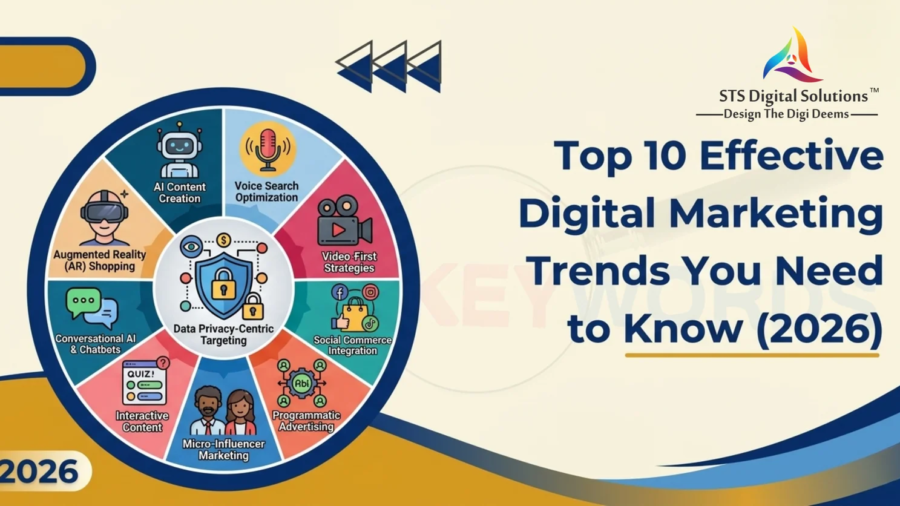
top 10 effective digital marketing trends you need to know

Top 10 Digital Marketing Trends to Watch in 2026

The biggest digital marketing trends in 2026 include AI-powered search, personalized customer experiences, first-party data strategies, short-form video, SEO for AI search, content quality, marketing automation, creator partnerships, conversion optimization, and privacy-focused marketing. Businesses that adapt to these trends early will be better positioned for sustainable growth.

Introduction

The biggest digital marketing trends in 2026 include AI-powered search, personalized customer experience

Digital marketing continues to evolve faster than ever.

Strategies that worked a few years ago may no longer deliver the same results today. Search behavior is changing, artificial intelligence is influencing how people discover information, and customers expect more personalized experiences across every digital channel.

For business owners, the challenge isn’t following every new trend—it’s identifying the ones that genuinely improve business performance.

At My Adwise, we believe successful marketing is built on long-term fundamentals while embracing meaningful innovation. Here are the ten trends businesses should pay close attention to in 2026.

s, first-party data strategies, short-form video, SEO for AI search, content quality, marketing automation, creator partnerships, conversion optimization, and privacy-focused marketing. Businesses that adapt to these trends early will be better positioned for sustainable growth.

1. AI-Powered Search Will Continue to Grow

Google AI Overview, AI assistants, and conversational search are changing how people discover websites.

Businesses should optimize content for:

  • User intent
  • EEAT
  • AEO (Answer Engine Optimization)
  • GEO (Generative Engine Optimization)
  • Clear content structure

Creating genuinely helpful content is becoming more important than simply targeting keywords.

2. Content Quality Will Outperform Content Quantity

Publishing more articles does not automatically produce better results.

Businesses should focus on creating:

  • Comprehensive guides
  • Original insights
  • Practical examples
  • Case studies
  • Updated information

One exceptional article often delivers more value than several low-quality posts.

3. First-Party Data Will Become More Valuable

As privacy regulations evolve, businesses should rely less on third-party tracking and focus more on building direct customer relationships.

Examples include:

  • Email subscribers
  • Customer accounts
  • Loyalty programs
  • CRM systems
  • Newsletter communities

Owning customer relationships provides greater long-term stability.

4. Short-Form Video Will Remain a Powerful Channel

Video continues to influence purchasing decisions.

Educational videos, product demonstrations, customer stories, and behind-the-scenes content help businesses build trust while increasing engagement across platforms.

Quality and consistency matter more than chasing viral content.

5. Personalization Will Improve Customer Experience

Customers increasingly expect relevant experiences.

Businesses can personalize:

  • Email campaigns
  • Product recommendations
  • Landing pages
  • Offers
  • Educational content

Thoughtful personalization improves engagement without overwhelming users.

6. SEO Will Focus More on Topical Authority

Instead of creating isolated blog posts, businesses should build connected content clusters.

For example, a digital marketing agency might develop comprehensive resources around:

  • SEO
  • Google Ads
  • Content Marketing
  • AI Search
  • Shopify SEO
  • Social Media Marketing

This helps search engines understand expertise across an entire subject.

7. Marketing Automation Will Save Time

Automation supports efficiency by handling repetitive tasks such as:

  • Email sequences
  • Lead nurturing
  • Customer follow-ups
  • Reporting
  • Campaign scheduling

Automation should enhance customer experience—not replace meaningful communication.

8. Conversion Optimization Will Become a Bigger Priority

Generating traffic is only valuable when visitors take action.

Businesses should continuously improve:

  • Landing pages
  • Forms
  • Calls to action
  • Website speed
  • Mobile usability
  • Checkout experience

Small improvements in conversion rates often produce significant business results.

9. Creator Partnerships Will Continue to Grow

Consumers often trust recommendations from creators and industry experts more than traditional advertising.

Brands should focus on partnerships that align naturally with their audience instead of pursuing influencers based solely on follower counts.

Authenticity creates stronger long-term relationships.

10. Brand Trust Will Be the Biggest Competitive Advantage

Technology will continue to evolve, but trust will remain constant.

Businesses that consistently provide accurate information, excellent customer experiences, and transparent communication are more likely to build loyal audiences.

Strong brands are built over time through consistency—not shortcuts.

Action Plan for Businesses

To prepare for 2026:

  • Invest in SEO and AI-friendly content.
  • Build topical authority.
  • Improve website performance.
  • Develop first-party customer relationships.
  • Create educational content consistently.
  • Monitor analytics and user behavior.
  • Test new ideas while maintaining proven fundamentals.

Businesses that adapt gradually and strategically are often better positioned than those constantly chasing every new trend.

Frequently Asked Questions

Which digital marketing trend is the most important in 2026?

AI-powered search and high-quality content are among the most influential trends because they affect how customers discover and trust businesses online.

Should small businesses follow every trend?

No. Focus on trends that align with your audience, goals, and available resources rather than trying to implement everything at once.

Is SEO still worth investing in?

Yes. SEO remains one of the strongest long-term marketing channels, especially when combined with high-quality content and a well-planned digital strategy.

Conclusion

Digital marketing in 2026 is not about abandoning proven strategies—it’s about adapting them to changing customer behavior and evolving technology.

Businesses that prioritize helpful content, AI-ready SEO, customer trust, and data-driven decision-making will be better equipped to compete in the years ahead.

Instead of reacting to every trend, build a flexible marketing strategy that combines innovation with strong fundamentals. That’s the approach most likely to create sustainable long-term growth.

Why Choose My Adwise?

At My Adwise, we help businesses stay ahead of digital marketing trends through SEO, AI Search Optimization, Google Ads, Meta Ads, content marketing, technical SEO, and performance-driven growth strategies.

Our mission is to help brands adapt to the future of digital marketing while building long-term visibility, qualified leads, and measurable business growth.

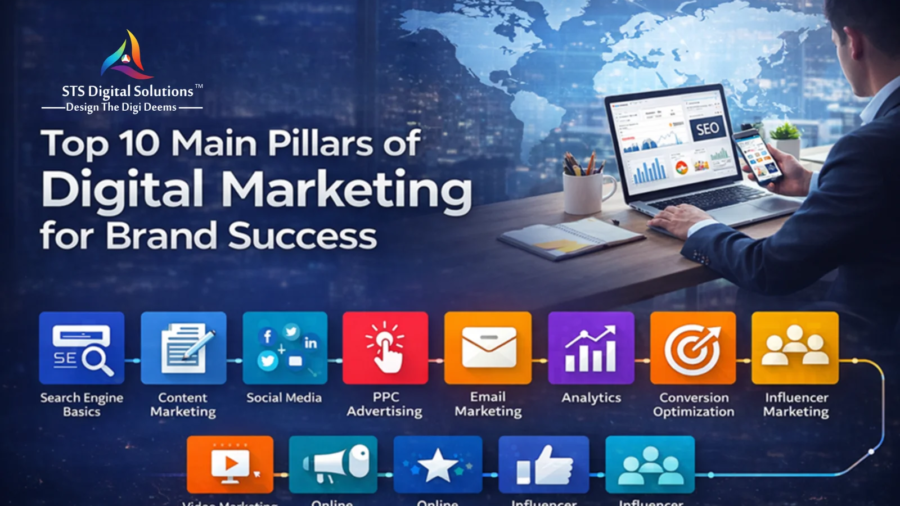
top 10 main pillarsof digital marketing for brand success

Top 10 Pillars of Successful Digital Marketing (2026 Complete Guide)

Successful digital marketing is built on a combination of SEO, content marketing, paid advertising, social media, email marketing, analytics, conversion optimization, branding, customer experience, and AI-powered automation. Businesses that integrate these pillars into one unified strategy are better positioned to generate consistent traffic, qualified leads, and long-term growth.

Introduction

There was a time when businesses could depend on a single marketing channel—ranking on Google, running Facebook Ads, or sending email campaigns—and still achieve impressive results.

That approach no longer works.

Today’s customers interact with businesses across multiple platforms before making a buying decision. They may discover your brand through Instagram, search for reviews on Google, read your blog, subscribe to your email list, and only then decide to contact you or make a purchase.

This means digital marketing is no longer about mastering one platform. It is about building an integrated system where every marketing channel supports the others.

At My Adwise, we believe sustainable business growth comes from combining multiple strategies rather than relying on a single source of traffic. Businesses that build this foundation are more resilient to algorithm updates, advertising cost increases, and changing customer behaviour.

Let’s explore the ten pillars that support long-term digital marketing success.

1. Search Engine Optimization (SEO)

SEO remains one of the most valuable long-term marketing investments.

Unlike paid advertising, SEO continues generating traffic long after content is published.

An effective SEO strategy includes:

  • Keyword research based on user intent
  • Technical SEO
  • High-quality content
  • Internal linking
  • Page speed optimization
  • Mobile-friendly design
  • EEAT-focused content

As AI-powered search continues to evolve, SEO is becoming less about keywords and more about providing the best possible answer to users.

2. Content Marketing

Content is the foundation of every successful digital marketing strategy.

Helpful content attracts visitors, answers questions, builds trust, and supports every stage of the customer journey.

Examples include:

  • Blog articles
  • Buying guides
  • Case studies
  • Videos
  • Infographics
  • Industry reports
  • FAQs

Rather than publishing content simply to increase page count, businesses should focus on solving real customer problems.

3. Paid Advertising (PPC)

Paid advertising delivers immediate visibility.

Platforms such as Google Ads and Meta Ads help businesses:

  • Generate leads quickly
  • Promote new products
  • Test new audiences
  • Increase brand awareness
  • Retarget previous visitors

However, paid advertising performs best when combined with strong landing pages, compelling content, and ongoing conversion optimization.

Depending entirely on paid ads can become expensive as competition increases.

Why These Three Pillars Work Together

Many businesses mistakenly treat SEO, content marketing, and paid advertising as separate activities.

In reality, they are most effective when they support one another.

For example:

  • SEO attracts long-term organic visitors.
  • Content marketing educates and builds trust.
  • Paid advertising accelerates visibility and captures immediate demand.

Together, these channels create a balanced marketing strategy that supports sustainable growth.

Key Takeaways

  • SEO builds long-term organic visibility.
  • Content marketing establishes authority and trust.
  • Paid advertising delivers immediate traffic and testing opportunities.
  • The strongest businesses combine multiple marketing channels instead of relying on only one.
  • Sustainable digital marketing is built on systems, not shortcuts.

4. Social Media Marketing

  • Social media is no longer just a platform for posting content—it’s a channel for building relationships.

    Today’s consumers expect brands to educate, engage, and interact consistently across platforms such as LinkedIn, Instagram, Facebook, X, and YouTube.

    A successful social media strategy should focus on:

    • Sharing educational content
    • Building brand awareness
    • Creating meaningful conversations
    • Showcasing customer success stories
    • Promoting valuable resources
    • Strengthening community engagement

    Rather than chasing viral posts, businesses should aim for consistent communication that builds long-term trust.

5. Email Marketing

  • Despite the growth of new marketing channels, email remains one of the highest ROI digital marketing strategies.

    Unlike social media, where algorithms control visibility, email allows businesses to communicate directly with their audience.

    Effective email campaigns can be used to:

    • Welcome new subscribers
    • Nurture leads
    • Share educational content
    • Promote products and services
    • Recover abandoned carts
    • Encourage repeat purchases

    The key is to provide value instead of sending constant promotional messages.

6. Conversion Rate Optimization (CRO)

  • Driving traffic is only part of the marketing process.

    If visitors leave without taking action, marketing budgets become less efficient.

    Conversion Rate Optimization focuses on improving the percentage of visitors who complete meaningful actions, such as:

    • Submitting a contact form
    • Booking a consultation
    • Purchasing a product
    • Downloading a resource
    • Subscribing to a newsletter

    Simple improvements—clear headlines, faster loading pages, better calls to action, and stronger trust signals—can significantly improve conversion performance.

7. Analytics and Data

  • Successful marketing decisions should be based on data, not assumptions.

    Businesses should regularly monitor metrics such as:

    Analytics helps identify what is working, what needs improvement, and where future investments should be focused.

8. Brand Positioning

  • Marketing attracts attention.

    Branding creates recognition.

    Customers are more likely to choose businesses that communicate a clear identity and value proposition.

    Strong brands maintain consistency across:

    • Website messaging
    • Social media
    • Visual identity
    • Customer communication
    • Advertising campaigns
    • Content marketing

    When every touchpoint reflects the same message, customers remember the brand more easily.

9. AI-Powered Marketing

  • Artificial intelligence is transforming how businesses plan, create, and optimize marketing campaigns.

    AI can support:

    • Keyword research
    • Content planning
    • Customer segmentation
    • Marketing automation
    • Campaign analysis
    • Predictive insights

    However, AI should enhance human expertise—not replace it.

    Businesses that combine AI efficiency with human creativity and strategic thinking are likely to achieve the best results.

10. Customer Experience (CX)

  • The final pillar—and often the most overlooked—is customer experience.

    Every interaction influences how customers perceive your business.

    A positive experience includes:

    • Fast website performance
    • Mobile-friendly design
    • Easy navigation
    • Clear pricing
    • Transparent policies
    • Responsive customer support
    • Smooth checkout process
    • Helpful post-purchase communication

    Excellent customer experience increases trust, encourages repeat business, and strengthens long-term brand loyalty.

Why These Ten Pillars Matter Together

  • Many businesses focus heavily on one marketing channel while ignoring the others.

    For example:

    • Strong advertising without SEO creates ongoing dependence on paid traffic.
    • Great SEO without conversion optimization limits revenue.
    • High-quality content without branding reduces recognition.
    • Good traffic without analytics makes it difficult to improve performance.

    The most successful businesses build an integrated marketing ecosystem where each pillar supports the others.

    This balanced approach creates stronger resilience, better customer relationships, and more sustainable growth.

A Practical Digital Marketing Checklist

  • Before launching your next campaign, ask yourself:

    ✔ Is your website technically optimized?

    ✔ Are you creating content that genuinely helps your audience?

    ✔ Are your paid campaigns aligned with your business goals?

    ✔ Is your social media building trust instead of only promoting products?

    ✔ Are you nurturing leads through email marketing?

    ✔ Have you optimized your website for conversions?

    ✔ Are you measuring the right performance metrics?

    ✔ Does your brand communicate a clear value proposition?

    ✔ Are you using AI to improve efficiency without sacrificing quality?

    ✔ Is your customer experience consistent across every touchpoint?

    Businesses that can confidently answer “yes” to these questions are often better positioned for long-term digital success.

Key Takeaways

  • Social media should build relationships, not just visibility.
  • Email marketing remains one of the highest ROI channels.
  • Conversion optimization increases the value of existing traffic.
  • Analytics enables better decision-making.
  • Strong branding creates recognition and trust.
  • AI enhances marketing efficiency when guided by human expertise.
  • Customer experience influences both conversions and long-term loyalty.

The My Adwise Digital Growth Framework™

At My Adwise, we believe that successful digital marketing is not built around a single channel. Instead, it is the result of multiple strategies working together to create a consistent customer journey.

Our Digital Growth Framework consists of six core stages:

1. Build Visibility

Visibility comes from:

The goal is to ensure your brand appears wherever potential customers are searching for solutions.

2. Build Trust

Traffic alone doesn’t generate revenue.

People buy from businesses they trust.

Trust is established through:

  • Helpful educational content
  • Customer reviews
  • Case studies
  • Transparent pricing
  • Secure website experience
  • Professional branding
  • Demonstrated expertise

Businesses that consistently educate their audience usually convert more visitors into customers.

3. Generate Qualified Leads

Not every visitor is a potential customer.

A successful marketing strategy focuses on attracting qualified prospects rather than maximizing traffic alone.

Lead generation channels include:

  • SEO
  • Google Ads
  • Meta Ads
  • Landing pages
  • Lead magnets
  • Contact forms
  • Consultation booking pages

The objective is to connect with people who are already looking for your products or services.

4. Improve Conversion Rates

Generating leads is only part of the process.

Your website should make it easy for visitors to take the next step.

Effective conversion optimization includes:

  • Clear calls to action
  • Simple navigation
  • Fast-loading pages
  • Trust badges
  • Testimonials
  • Easy-to-complete forms
  • Mobile-friendly design

Small improvements often create significant increases in overall performance.

5. Retain Existing Customers

Acquiring a customer is usually more expensive than keeping one.

Retention strategies include:

  • Email newsletters
  • Loyalty programs
  • Personalized recommendations
  • Exclusive offers
  • Educational resources
  • Excellent customer support

Long-term business growth depends on building lasting customer relationships.

6. Measure, Improve, Repeat

Digital marketing is never a one-time activity.

Review your performance regularly.

Monitor:

  • Organic traffic
  • Lead quality
  • Conversion rates
  • Customer Acquisition Cost (CAC)
  • Customer Lifetime Value (LTV)
  • Return on Investment (ROI)

Use these insights to improve future campaigns instead of relying on assumptions.

Common Digital Marketing Mistakes

Many businesses struggle because they make avoidable mistakes such as:

  • Depending entirely on paid advertising.
  • Ignoring SEO.
  • Publishing low-quality or duplicate content.
  • Failing to understand customer intent.
  • Inconsistent branding.
  • Poor website performance.
  • Weak calls to action.
  • Not tracking marketing performance.
  • Neglecting customer retention.
  • Chasing trends without a long-term strategy.

Avoiding these mistakes can improve both marketing efficiency and long-term business growth.

The Future of Digital Marketing

Digital marketing is becoming increasingly driven by artificial intelligence, automation, and personalized customer experiences.

Businesses that want to remain competitive should focus on:

  • AI-powered search optimization
  • Helpful, experience-driven content
  • First-party customer data
  • Marketing automation
  • Video-first communication
  • Personalization
  • Strong brand authority
  • Continuous learning and experimentation

Rather than trying to adapt to every algorithm update, build a marketing strategy that consistently delivers value to your audience.

Frequently Asked Questions

Which digital marketing channel delivers the best ROI?

There is no single answer. The best-performing strategy depends on your business model, industry, and goals. In most cases, combining SEO, content marketing, paid advertising, and email marketing delivers stronger long-term results than relying on one channel.

Is SEO still important in 2026?

Absolutely.

SEO continues to be one of the most valuable long-term marketing investments. As AI-powered search evolves, businesses that publish trustworthy, experience-driven content are likely to gain even greater visibility.

How does AI affect digital marketing?

AI helps businesses improve efficiency through content planning, campaign optimization, audience analysis, and automation.

However, human expertise remains essential for strategy, creativity, and decision-making.

Should small businesses invest in digital marketing?

Yes.

Digital marketing allows small businesses to compete with larger organizations by reaching targeted audiences, building trust, and generating qualified leads without requiring massive advertising budgets.

Final Thoughts

Digital marketing is no longer about mastering a single platform or chasing the latest trend.

Sustainable business growth comes from building a connected system where SEO, content marketing, paid advertising, social media, email marketing, analytics, branding, customer experience, and AI work together toward a common objective.

Businesses that focus on delivering genuine value, understanding customer needs, and continuously improving their marketing strategy will be better positioned to succeed in an increasingly competitive digital landscape.

The companies that thrive over the next decade won’t necessarily be the ones spending the most on advertising—they’ll be the ones building the strongest digital foundations.

Why Choose My Adwise?

At My Adwise, we help businesses create sustainable growth through a complete digital marketing strategy tailored to their goals.

Our services include:

  • Search Engine Optimization (SEO)
  • AI Search Optimization
  • Answer Engine Optimization (AEO)
  • Generative Engine Optimization (GEO)
  • Google Ads Management
  • Meta Ads Management
  • Shopify SEO
  • Content Marketing
  • Technical SEO
  • Conversion Rate Optimization (CRO)

Instead of focusing only on rankings or clicks, we help businesses build long-term visibility, generate qualified leads, and create measurable business growth through data-driven digital marketing strategies.

Whether you’re a startup, a growing D2C brand, or an established business, the right strategy can transform your online presence into a consistent source of customers.

The future of digital marketing belongs to businesses that educate, build trust, and adapt faster than the competition. Start building that foundation today.

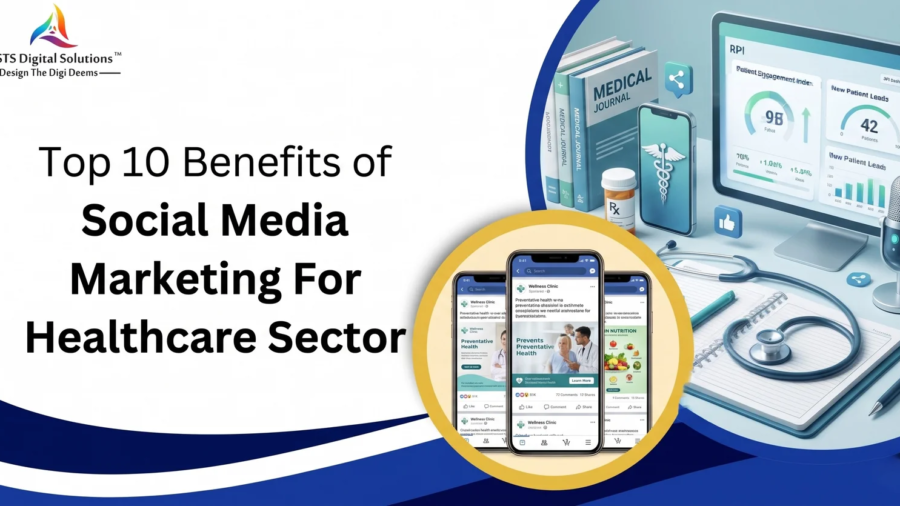
top 10 benefits of social media marketing for healthcare sector

Top 10 Ways Social Media Marketing Helps Healthcare Businesses

Social media marketing helps healthcare businesses increase brand awareness, educate patients, build trust, strengthen community engagement, and generate qualified inquiries. When combined with SEO and a professional website, it becomes an effective long-term strategy for sustainable practice growth.Lorem ipsum dolor sit amet, consectetur adipiscing elit. Ut elit tellus, luctus nec ullamcorper mattis, pulvinar dapibus leo.

Introduction

Healthcare has become more digital than ever.

Today, many patients research symptoms, compare healthcare providers, read reviews, and visit social media profiles before booking an appointment. Whether you’re a private clinic, hospital, dental practice, diagnostic center, or healthcare startup, your online presence significantly influences how people perceive your brand.

However, successful healthcare marketing is not about creating viral posts or aggressive promotions. It is about building trust, sharing accurate information, and maintaining meaningful relationships with patients.

At My Adwise, we believe social media should support a healthcare business by educating audiences, strengthening credibility, and improving patient engagement while following ethical marketing practices.

1. Builds Trust Before the First Appointment

Healthcare has become more digital than ever.

Today, many patients research symptoms, compare healthcare providers, read reviews, and visit social media profiles before booking an appointment. Whether you’re a private clinic, hospital, dental practice, diagnostic center, or healthcare startup, your online presence significantly influences how people perceive your brand.

However, successful healthcare marketing is not about creating viral posts or aggressive promotions. It is about building trust, sharing accurate information, and maintaining meaningful relationships with patients.

At My Adwise, we believe social media should support a healthcare business by educating audiences, strengthening credibility, and improving patient engagement while following ethical marketing practices.

2. Educates Patients

One of the greatest strengths of social media is patient education.

Instead of promoting services in every post, healthcare businesses can explain topics such as:

  • Preventive healthcare
  • Healthy lifestyle habits
  • Vaccination awareness
  • Seasonal health precautions
  • Frequently asked patient questions

Educational content positions your organization as a trusted source of information rather than simply a service provider.

3. Strengthens Brand Awareness

Many patients may not need immediate treatment today, but they often remember brands that consistently provide valuable information.

Publishing high-quality content helps your clinic remain visible and recognizable within your local community.

Over time, this familiarity can influence future healthcare decisions.

4. Improves Patient Engagement

Social media creates opportunities for two-way communication.

Healthcare businesses can:

  • Answer general questions
  • Share clinic updates
  • Conduct educational live sessions
  • Celebrate awareness campaigns
  • Encourage community participation

While patient-specific medical advice should remain private, general engagement helps build stronger relationships.

5. Supports Local SEO

Although social media is not a direct Google ranking factor, it complements local SEO by increasing brand visibility.

Patients who discover your clinic on social media often search for your business on Google to read reviews, view directions, or visit your website.

This integrated journey strengthens your overall digital presence.

6. Highlights Your Expertise

Healthcare organizations can demonstrate expertise by sharing:

  • Professional achievements
  • New technology adoption
  • Certifications
  • Community outreach
  • Educational workshops
  • Behind-the-scenes practice updates

Authentic expertise builds credibility while maintaining compliance with professional standards.

7. Encourages Patient Reviews

Positive reviews influence healthcare decisions.

After delivering a good patient experience, encourage satisfied patients to leave reviews on trusted platforms such as your Google Business Profile.

Always follow applicable privacy regulations and avoid requesting reviews in a way that could compromise patient confidentiality.

8. Supports Recruitment and Employer Branding

Social media isn’t only for attracting patients.

Hospitals and clinics can also use it to:

  • Showcase workplace culture
  • Highlight employee achievements
  • Announce career opportunities
  • Build their reputation as an employer

This helps attract talented healthcare professionals.

9. Promotes Community Health Campaigns

Healthcare businesses can support public awareness by participating in campaigns related to:

  • World Health Day
  • Blood donation drives
  • Cancer awareness initiatives
  • Mental health awareness
  • Diabetes awareness
  • Women’s health campaigns

Community-focused content strengthens your reputation and demonstrates social responsibility.

10. Generates Qualified Patient Inquiries

When social media is combined with:

it becomes part of a complete digital marketing strategy that can generate qualified inquiries from people actively seeking healthcare services.

The focus should always remain on providing value and helping patients make informed decisions.

Best Practices for Healthcare Social Media Marketing

To maximize results:

  • Share accurate and evidence-based information.
  • Maintain a consistent posting schedule.
  • Use professional visuals.
  • Respond respectfully to public comments.
  • Protect patient privacy.
  • Include clear calls to action for appointments or consultations where appropriate.
  • Link social media content to relevant pages on your website.

Frequently Asked Questions

Which social media platform is best for healthcare businesses?

The right platform depends on your audience. Facebook, Instagram, LinkedIn, and YouTube are commonly used because they support education, community engagement, and professional communication.

Can social media replace a healthcare website?

No. Social media should complement your website, not replace it. Your website remains the primary destination for appointments, service information, and search visibility.

How often should healthcare businesses post?

Consistency is more important than frequency. A regular publishing schedule with valuable content is generally more effective than posting excessively.

Conclusion

Social media marketing has become an essential part of healthcare branding and patient communication.

By educating audiences, building trust, supporting local visibility, and engaging with the community, healthcare organizations can strengthen their digital presence while maintaining professionalism and ethical standards.

The most successful healthcare businesses view social media not as an advertising channel alone, but as a platform for building long-term relationships with patients.

Why Choose My Adwise?

At My Adwise, we help healthcare businesses grow through ethical digital marketing strategies, including SEO, local SEO, content marketing, social media marketing, Google Business Profile optimization, and performance-driven campaigns.

Our approach focuses on increasing visibility, strengthening patient trust, and supporting sustainable business growth through responsible digital marketing.

how d2c fashion brands scale from zero to ten lakhs per month

How D2C Fashion Brands Grow from Zero to ₹10 Lakhs a Month in 2026

Growing a D2C fashion brand to ₹10 lakhs in monthly revenue requires more than running ads. Successful brands combine strong branding, Shopify optimization, SEO, paid advertising, customer retention, influencer partnerships, and data-driven decision-making to build sustainable long-term growth.

Introduction

Launching a fashion brand has never been easier.

Growing one profitably is a different challenge.

Thousands of apparel and lifestyle brands launch every year, but only a small percentage build consistent monthly revenue. The difference usually isn’t the product alone—it’s the growth strategy behind it.

Many founders spend heavily on Meta Ads during the first few months but neglect SEO, customer retention, and brand positioning. As advertising costs rise, profitability becomes harder to maintain.

At My Adwise, we’ve seen that the brands that scale successfully focus on creating multiple growth channels instead of depending on a single source of traffic.

Step 1: Build a Brand, Not Just a Store

Customers don’t remember generic products—they remember brands.

Before investing heavily in marketing, define:

  • Your target audience
  • Your unique value proposition
  • Your brand voice
  • Your visual identity
  • Your pricing strategy

Whether you sell premium streetwear, sustainable fashion, or affordable everyday clothing, consistency builds recognition and trust.

Step 2: Launch on a Scalable Ecommerce Platform

Your ecommerce platform should support future growth.

For many D2C brands, Shopify offers a balance of usability, scalability, and security.

Once your store is live, focus on:

  • Fast-loading pages
  • Mobile-friendly design
  • Simple navigation
  • Optimized product pages
  • Secure checkout

A smooth shopping experience reduces friction and supports conversions.

Step 3: Invest in SEO Early

Many fashion brands postpone SEO until they become larger.

This is often a costly mistake.

Publishing helpful content from the beginning helps your website build authority over time.

Examples include:

  • Fashion buying guides
  • Seasonal trend articles
  • Style tips
  • Fabric care guides
  • Product comparison posts

These articles attract organic traffic while supporting product pages through internal linking.

Step 4: Use Paid Ads Strategically

Paid advertising remains an important growth channel.

However, the objective shouldn’t be to depend on ads forever.

Instead, use campaigns to:

  • Launch new collections
  • Test audiences
  • Promote seasonal offers
  • Retarget previous visitors
  • Increase brand awareness

Meanwhile, SEO continues building long-term organic visibility in the background.

Step 5: Build Customer Trust

Fashion purchases are influenced by confidence.

Strengthen trust through:

  • Genuine customer reviews
  • User-generated content (UGC)
  • Clear return and exchange policies
  • High-quality product photography
  • Accurate sizing information
  • Transparent shipping details

The easier it is for customers to trust your brand, the more likely they are to complete a purchase.

Step 6: Focus on Customer Retention

Acquiring a customer is only the beginning.

Long-term growth comes from repeat purchases.

Retention strategies include:

  • Email marketing
  • Loyalty programs
  • Exclusive product launches
  • Personalized recommendations
  • Post-purchase communication

Increasing customer lifetime value often has a greater impact on profitability than constantly increasing advertising spend.

Step 7: Use Data to Improve Decisions

Successful fashion brands monitor more than revenue.

Track metrics such as:

  • Conversion rate
  • Customer Acquisition Cost (CAC)
  • Customer Lifetime Value (LTV)
  • Average Order Value (AOV)
  • Repeat purchase rate
  • Organic traffic growth

These metrics help identify opportunities for improvement and guide smarter marketing decisions.

Common Growth Mistakes

Many fashion startups struggle because they:

  • Depend entirely on paid advertising.
  • Ignore SEO.
  • Publish duplicate product descriptions.
  • Neglect email marketing.
  • Have inconsistent branding.
  • Fail to analyze performance data.

Avoiding these mistakes creates a stronger foundation for sustainable growth.

The My Adwise Fashion Growth Framework™

At My Adwise, we recommend a growth strategy built around six pillars:

  1. Brand Positioning – Build recognition and trust.
  2. SEO – Generate sustainable organic traffic.
  3. Paid Advertising – Capture immediate demand.
  4. Content Marketing – Educate and engage potential customers.
  5. Conversion Optimization – Improve the shopping experience.
  6. Retention Marketing – Increase repeat purchases and long-term profitability.

Together, these pillars help fashion brands scale more efficiently while reducing dependence on a single marketing channel.

Frequently Asked Questions

Can a new fashion brand reach ₹10 lakhs per month?

Yes, it is possible for some businesses, but results depend on product-market fit, pricing, competition, marketing execution, and consistent optimization. There is no guaranteed timeline.

Is Shopify suitable for fashion brands?

Yes. Shopify provides a scalable platform with features that support ecommerce growth, especially when combined with effective SEO and digital marketing.

Should fashion brands invest in SEO from the beginning?

Absolutely. SEO takes time to build momentum, so starting early helps create long-term organic visibility.

Conclusion

Growing a D2C fashion brand isn’t about finding one viral campaign.

It requires building a complete growth system where branding, SEO, paid advertising, customer experience, and retention work together.

Brands that invest in long-term visibility while continuously improving the customer journey are better positioned to achieve sustainable growth in an increasingly competitive market.

Rather than chasing quick wins, focus on building a business that customers trust and return to repeatedly.

Why Choose My Adwise?

At My Adwise, we help fashion and D2C brands grow through SEO, Shopify optimization, AI Overview optimization, Meta Ads, Google Ads, content marketing, and conversion-focused digital strategies.

Our goal is to help businesses build sustainable growth, attract qualified customers, and create long-term brand value—not just temporary spikes in traffic or sales.

how d2c brands scale using paid ads and seo combo

How D2C Brands Grow Faster by Combining SEO and Paid Ads (2026 Guide)

The fastest-growing D2C brands don’t rely solely on SEO or paid advertising. They combine both strategies to generate immediate sales through ads while building long-term organic traffic with SEO. This balanced approach improves visibility, reduces customer acquisition costs, and creates sustainable business growth.

Introduction

One of the biggest mistakes D2C brands make is treating SEO and paid advertising as competing strategies.

In reality, they work best together.

Paid advertising can generate immediate traffic and sales, making it ideal for product launches, promotions, and testing new audiences. SEO, on the other hand, builds long-term visibility by helping your website attract organic traffic from Google Search and AI-powered search platforms.

At My Adwise, we’ve found that brands using both channels strategically are often better positioned to scale because they diversify their traffic sources instead of depending on a single platform.

Why Depending on One Marketing Channel Is Risky

Every marketing channel has limitations.

If your business relies only on paid ads:

  • Rising advertising costs can reduce profitability.
  • Platform policy changes can affect campaign performance.
  • Traffic stops as soon as the advertising budget ends.

If your business relies only on SEO:

  • Organic growth usually takes time.
  • Highly competitive keywords may require sustained effort.
  • Seasonal campaigns may need faster visibility than SEO can provide.

Combining both channels creates a more resilient marketing strategy.

What SEO Brings to a D2C Brand

SEO helps businesses build long-term organic visibility.

Benefits include:

  • Consistent search traffic
  • Higher brand credibility
  • Better visibility in Google Search
  • Opportunities to appear in AI-powered search experiences
  • Reduced dependence on paid advertising over time

Content such as buying guides, product comparisons, and educational blogs also supports customers throughout their purchasing journey.

What Paid Advertising Brings

Paid advertising helps brands:

  • Launch new products quickly
  • Reach targeted audiences
  • Test marketing messages
  • Generate immediate website traffic
  • Retarget previous visitors

Campaigns on Google Ads and Meta Ads are particularly effective for capturing demand and increasing short-term sales.

Why SEO and Paid Ads Work Better Together

The strongest growth comes when each channel supports the other.

For example:

  • Paid ads drive traffic to newly launched products.
  • SEO attracts long-term organic visitors.
  • Blog articles answer customer questions before purchase.
  • Retargeting campaigns reconnect with visitors who didn’t convert initially.
  • Email marketing nurtures leads generated through both channels.

Instead of competing, these strategies strengthen one another.

Build a Complete Customer Journey

Customers rarely purchase after a single interaction.

A typical journey might look like this:

  1. A customer discovers your brand through a Meta Ad.
  2. Later, they search Google for product reviews.
  3. They read your buying guide.
  4. They compare products.
  5. They return through a Google Search result or email campaign.
  6. They complete the purchase.

By being visible at multiple touchpoints, your brand becomes more trustworthy and memorable.

Reduce Customer Acquisition Costs

One of the biggest advantages of combining SEO with paid advertising is improved efficiency.

SEO gradually lowers your dependence on paid traffic by generating organic visitors.

Paid advertising then becomes more effective because it focuses on high-value campaigns rather than carrying the entire acquisition strategy.

This balanced approach can contribute to healthier long-term marketing economics.

Measure the Right Metrics

Instead of focusing only on clicks or impressions, monitor metrics that reflect business growth:

These metrics provide a clearer picture of marketing performance.

Common Mistakes to Avoid

Many D2C brands limit their growth by:

  • Treating SEO and paid ads as separate teams.
  • Ignoring content marketing.
  • Sending paid traffic to weak landing pages.
  • Failing to track conversions accurately.
  • Neglecting email marketing and customer retention.

A coordinated strategy usually produces stronger long-term results.

The My Adwise Growth Framework™

At My Adwise, we recommend integrating five key growth pillars:

  1. SEO – Build sustainable organic visibility.
  2. Paid Advertising – Capture immediate demand.
  3. Content Marketing – Educate and build trust.
  4. Conversion Optimization – Increase the value of every visitor.
  5. Retention Marketing – Encourage repeat purchases and long-term loyalty.

Together, these pillars create a marketing ecosystem that supports both immediate revenue and sustainable growth.

Frequently Asked Questions

Should a new D2C brand invest in SEO or paid ads first?

It depends on your goals and budget. Paid ads can generate faster initial visibility, while SEO builds long-term organic growth. Many businesses benefit from investing in both at different levels.

Does SEO reduce advertising costs?

SEO doesn’t directly reduce ad costs, but it can reduce reliance on paid traffic by attracting organic visitors over time.

Is content marketing important for ecommerce?

Yes. Educational content helps customers research products, builds trust, and supports both SEO and conversion optimization.

Conclusion

Successful D2C brands understand that sustainable growth doesn’t come from choosing between SEO and paid advertising.

Instead, they create an integrated strategy where paid campaigns generate immediate demand while SEO builds lasting visibility and authority.

When combined with helpful content, strong user experience, and ongoing optimization, these channels create a growth system that is more resilient, more profitable, and better prepared for the future of digital marketing.

Why Choose My Adwise?

At My Adwise, we help D2C and ecommerce brands combine SEO, AI Overview optimization, Google Ads, Meta Ads, technical SEO, and content marketing into one unified growth strategy.

Our focus is on generating qualified traffic, improving conversions, and building sustainable business growth—not just short-term marketing wins.